Essential Ireland Travel Tips
Are you planning a trip to Ireland soon? Be sure to read these Ireland travel tips before you go!
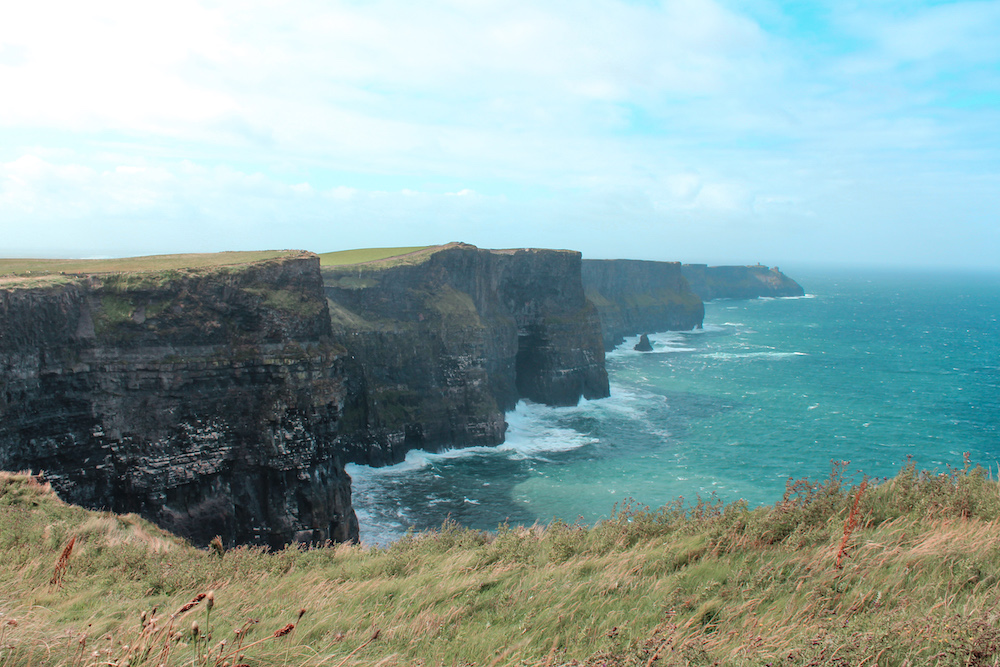
Ireland, nicknamed the Emerald Isle, is an incredible destination for travelers. From its lush green landscapes and natural wonders like the Cliffs of Moher, to charming towns and historic sites like Blarney Castle, there’s so much to discover in this country, and Ireland truly has something to offer for everyone.
It’s a fairly small and compact country, so you can easily explore the highlights of Ireland in one week — although if you can spare more time, ten days to two weeks is even better for enjoying Ireland!
Ireland is a pretty “easy” destination too. It regularly ranks as one of the safest countries in Europe, and it’s an English-speaking country (well, over a third of the population speaks Irish too!) so you won’t have trouble communicating. But there are some things you need to know before you go.
Here’s a look at my top Ireland travel tips to help you prepare for your trip:
1. Prepare for crazy weather.
One thing to know about Ireland is that you can experience all four seasons in one day. It can also be really rainy one minute, and perfectly sunny with a rainbow the next. I traveled to Ireland in mid-August, and experienced a lot of crazy weather on my trip, so it’s very important to pack appropriately.
Even in the summer, Ireland can be quite chilly during the day (and downright cold early in the morning or at night), so I recommend packing warmer clothing than you think you might need.
During the summer, the high temperatures are often never above 70° F, and it can feel even cooler if it’s windy. Ireland is also fairly rainy, with 10 to 12 rainy days per month throughout the year.
For my August trip, I actually wished I had a proper coat instead of just sweaters, because it was really cold and windy in some of the places I visited. Packing lots of layers is key for Ireland! You should also come prepared with rain gear, like a sturdy umbrella, a waterproof jacket, and water-resistant shoes.
2. Don’t just stay in Dublin.
Dublin is a great city, but it’s very different from the rest of Ireland. On my first trip to Ireland, I based myself in Dublin because I had just under a week, was by myself, and didn’t want to rent a car.
However, I ended up wishing I could have spent time in other destinations around Ireland. Smaller cities like Cork and Galway make great bases for exploring the southern and western parts of Ireland, and there are also tons of charming small towns or places in the countryside where you can stay to.
For Dublin, I’d say you really don’t need more than two full days in the city!
3. Know when you should rent a car (and when not to.)
Like I mentioned above, I didn’t rent a car when I visited Ireland by myself because I’m not a confident driver, and it was going to be expensive and a logistical hassle. Instead, I based myself in Dublin for the duration of my trip and booked day trips to other destinations around Ireland that included transportation.
Since Ireland is fairly small, you can visit many of the most popular destinations on a day trip from Dublin. So I was able to explore several other destinations in Ireland without having to rent a car.
However, renting a car is the best way to explore Ireland in most situations. I would only recommend doing what I did if you’re short on time (i.e. you have less than a week in Ireland), traveling solo, or really don’t feel comfortable driving on the opposite side of the road. Otherwise, a car is worth it!
Many parts of Ireland outside of major cities are not accessible by public transportation, and the real beauty of Ireland is in the countryside, so having your own car is the best way to see everything.
4. Driving is on the “wrong” side.
If you’re coming from the United States and are used to driving on the right side of the road, it’s important to be prepared that Ireland drives on the “wrong” side of the road, AKA the left side of the road.
This can be challenging to adjust to, which is one of the reasons I was apprehensive about driving in Ireland. However, it’s not too big of a deal for most travelers once you get the hang of it.
The roads are in good condition and drivers in Ireland aren’t crazy like they are in, say, Italy, so it’s a pretty comfortable destination to drive in. One thing to note is that most road signs are written in English and Irish, but in certain Gaeltacht areas of western Ireland, they are only written in Irish.
5. Book popular attractions in advance.
There are some popular tourist attractions in Ireland you need to book in advance. Especially if you are traveling to Ireland in peak season (summer), some of these attractions can be fully sold out:
- Skellig Michael: If you want to visit this remote island that was used as a Star Wars filming location, or any other islands like the Aran Islands, boat tours should be booked far in advance.
- Newgrange: Tickets to this ancient Celtic monument and tomb site are limited, and often sell out days or weeks in advance. You should definitely book these well in advance.
- Book of Kells: In Dublin, you need to book timed tickets in advance if you want to see the ancient manuscripts of the Book of Kells, as well as the stunning Trinity College library.
- Kilmainham Gaol: Tours of this notorious former prison in Dublin are incredibly popular, and always sell out. A limited number of tickets are released 30 days in advance, so grab yours quickly.
- Guinness Storehouse: One more Dublin attraction that can be fully booked up, especially in peak season, is the Guinness Storehouse. Buy your tickets at least a few days in advance for this.
It’s a good idea to book any other attractions or museums in advance if you can, to avoid waiting in line.
6. Understand the difference between Ireland and Northern Ireland.
An important distinction to understand is the different between Ireland and Northern Ireland.
The Republic of Ireland is an independent country occupying most of the island of Ireland. Northern Ireland is part of the United Kingdom but it is geographically separate from the rest of the UK, and occupies the northern part of the island of Ireland. There is effectively no border between the two countries.
The rest of the UK (which consists of England, Scotland, and Wales) lies to the east of Ireland, on the larger island of Great Britain. Ireland was under British rule for many centuries, gaining independence in 1921 as the Irish Free State, and becoming the present-day Republic of Ireland in 1949.
However, the area of Northern Ireland was disputed, with conflicts known as the Troubles lasting for decades. Although Northern Ireland is part of the UK today, many still want it to be united with Ireland.
7. Don’t skip Northern Ireland.
Northern Ireland is a must for any trip to Ireland! I highly recommend visiting Belfast, the capital of Northern Ireland, where you can learn more about the history of the Troubles. A black cab tour is the best way to explore Belfast and learn about the political conflict that gripped Northern Ireland.
Titanic Belfast is another top attraction in Northern Ireland. This expansive museum and exhibit chronicles the shipbuilding journey of the Titanic in Belfast, up through its tragic sinking in the Atlantic.
Beyond Belfast, the top place you should visit in Northern Ireland is the Causeway Coast, a beautiful natural area with unique formations like the Giant’s Causeway and attractions like the Carrick-a-Rede rope bridge.
8. Carry the right currency.
Ireland is part of the European Union and uses the euro. Northern Ireland is part of the UK and uses the British pound. If you’ll be visiting both places, you’ll want to keep this distinction in mind!
However, you don’t need to carry that much cash in Ireland. Almost everywhere takes card (Visa or MasterCard, American Express doesn’t usually work), except maybe some places in very rural areas.
It’s a good idea to have some currency on hand, but you don’t need to take out a lot.
When paying with card in Ireland or Northern Ireland, the card machine might ask if you want to pay in USD or the local currency. Always select the local currency, because the USD rate contains a high markup. The same goes for taking out cash at ATMs — always decline the inflated USD conversion rate.
9. Know how much to tip.
Is tipping expected in Ireland? What about Northern Ireland? Here’s what you should know!
Tipping 10% is customary in restaurants and cafes. Check the bill before you tip, because sometimes it will already be included as a service charge. If not, you can leave an additional 10% as a tip.
Tipping is not customary in pubs for over-the-bar service. The only time you would tip in a pub is if you have a meal there (standard 10% tip) or drinks delivered to the table (one or two euros per round.)
You also should not feel obligated to tip taxi drivers or tour guides unless you want to.
This guidance applies to both Ireland and Northern Ireland. Generally, the tipping culture is very different compared to the US, and tipping is not as common or as much as in the US.
10. Embrace the Irish cuisine.
Finally, one more tip is to embrace the Irish cuisine. Irish food can get a bad rap for not being the most exciting or flavorful cuisine in the world, but it’s comforting and hearty and steeped in tradition.
Some of the top foods to try in Ireland are Irish soda bread, Irish stew, Ulster fry (the ultimate Irish breakfast), Colcannon mash, boxty (potato pancakes), and barmbrack (fruit cake.) The best place to try Irish cuisine is at a cozy pub or restaurant, where you can accompany it with a frothing mug of Guinness.
If you’re a vegetarian like me, you can find vegetarian variations on popular Irish dishes that have meat in them (like Irish stew, Ulster fry, or shepherd’s pie), and many potato-based dishes are vegetarian.
Best Ireland Travel Tips
This guide showed you some of the best Ireland travel tips to know before you go.
Overall, Ireland is a pretty easy destination, but it does require some advance planning and preparation to make the most of your trip. By following these Ireland travel tips, you can ensure you have the best time.
Enjoy your trip to Ireland!
Related Guides