Mistakes Travelers Make in Greece
Are you planning a trip to Greece soon? Be sure to read this first! Greece is a bucket list destination for many travelers, but if you aren’t careful, these common mistakes could impact your dream trip.
I’ve now been to Greece on four separate trips, visiting a number of destinations around the country. Greece is definitely worthy of its bucket list status. I’m writing this guide to share the big mistakes that many first-time visitors make (including myself!) so you can avoid them and have a great trip to Greece.
Here’s a look at the biggest mistakes that tourists make in Greece:
1. Skipping Athens
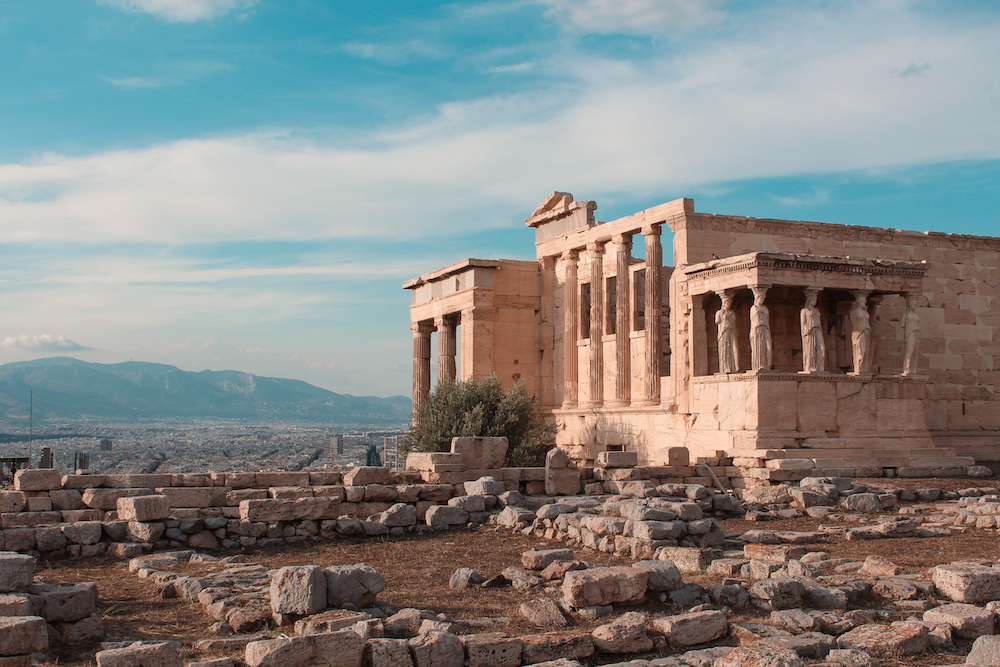
Some travelers are so eager to visit the Greek islands that they skip Athens entirely, or barely spend a day there. I think this is a big mistake! Greece’s capital city is definitely worth two full days of your trip.
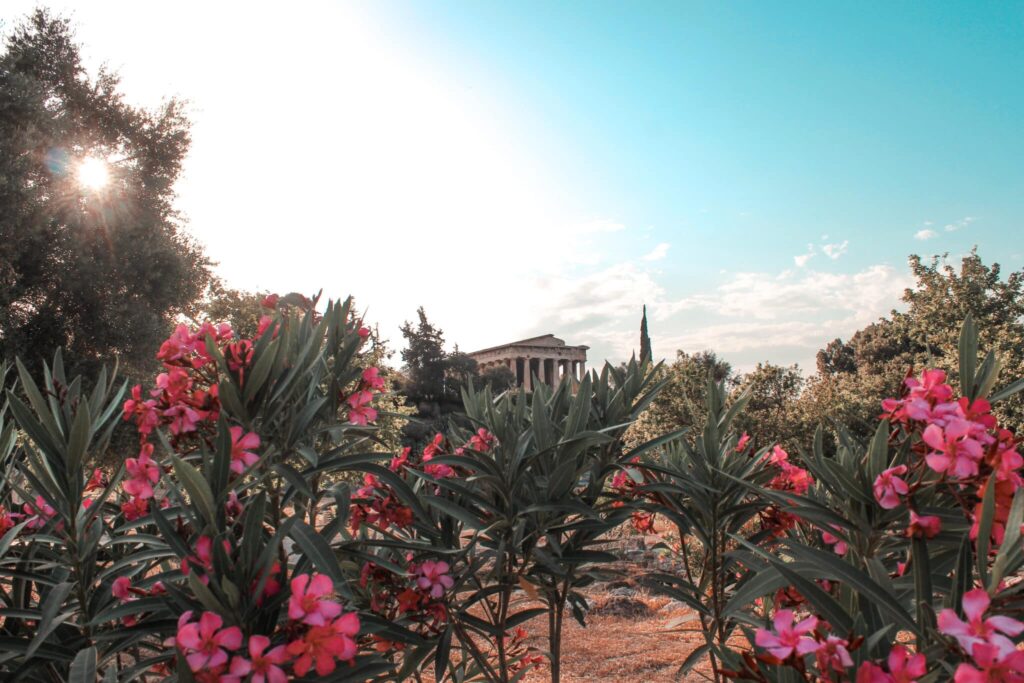
There’s so much to do in this sprawling city, including visiting the famous ruins of the Acropolis and the Ancient Agora, as well as checking out the Acropolis Museum. Athens is full of vibrant neighborhoods with delicious food, which you can explore on a walking tour or food tour while you’re there.
Athens is also where you’ll find the cheapest prices for souvenirs, making it a great place to do your shopping. I highly recommend booking two nights in Athens at the beginning of your trip to Greece.
2. Spending too much time in Athens
I know that I just said skipping Athens is a mistake, but so is spending too much time there — which I definitely did on one of my trips to Greece! Athens is a really cool city, but it can also be chaotic and gritty.
Even if you’re a big city person like me, there’s so much more incredible beauty to Greece, including the islands and the northern part of the country. I honestly don’t think you need more than four full days in Athens. That gives you plenty of time to visit all the main tourist highlights and then some.
Less than two days and you might feel rushed and miss a lot of the cool things to do in Athens, but more than four days and you might start to go a little crazy and want to get out of the city.
3. Thinking Greece is only Santorini and Mykonos
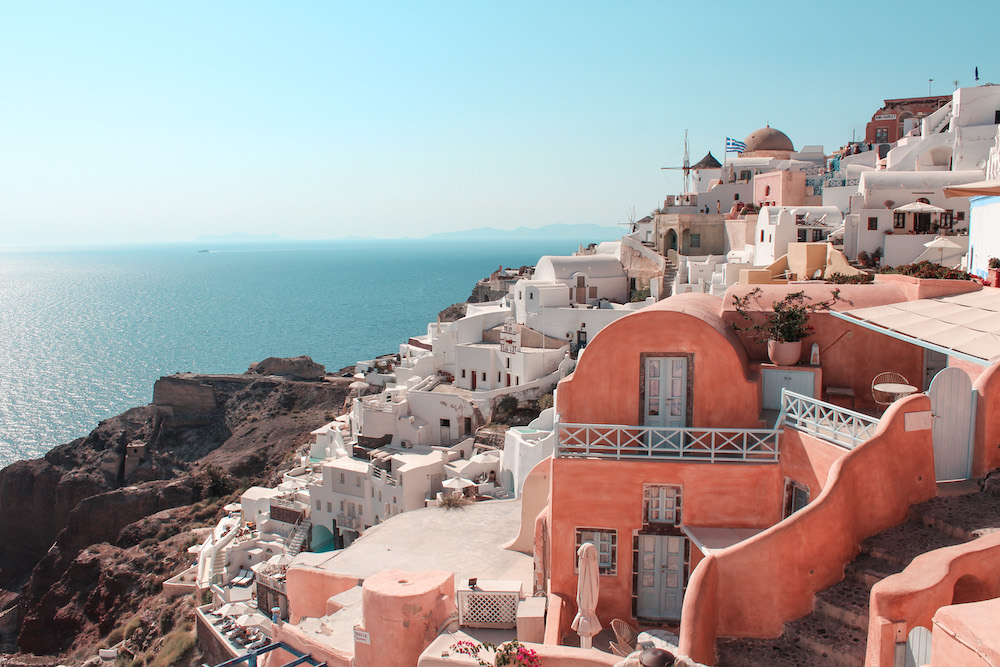
The Greek islands are a huge draw, and the two most visited islands are by far Santorini and Mykonos. I’ve been to each of these islands twice now, and while they’re beautiful, they’re also overrated.
Santorini and Mykonos are both part of the Cycladic Islands, just one chain among many of the Greek islands, and two islands among over 200 total inhabited islands. They’re both really popular, really expensive, and really overhyped. Am I suggesting that you skip both of these islands entirely? No way!
I know that these destinations are on the bucket list for many travelers. But if you only have time to visit two islands, I highly recommend choosing either Santorini or Mykonos, and then picking another lesser-visited Greek island. There are so many to choose from, and each has its own unique personality.
It’s a shame to only visit Santorini and Mykonos, and not see any other beautiful islands.
4. Visiting during peak summer months
Being in Southern Europe and on the Mediterranean, Greece gets hot during the summer. In fact, there have been record-breaking heat waves in Greece every summer for the past few years.
July and August are the hottest months of the year, and historically, these are also the most popular months of the year to visit Greece, which leads to high crowds (including massive cruise ship crowds) and high prices. All three of these factors combined means that it can be an unpleasant time of year to visit.
Early June and late September are my top picks for enjoying summer weather without the extreme heat or crowds (with September being the best month to swim in the sea since it’s had all summer to warm up.)
The “shoulder season” of May or October is even better for low crowds and cheaper prices. It may very well still be warm enough for some beach days too, although it can be a bit of a gamble in these months.
5. Underestimating the heat
Underestimating the heat in Greece is a huge mistake. As I just mentioned, the country has been experiencing extreme summer heat waves, and even if you aren’t there during the worst of it July or August, it can still be sweltering hot around the country during June and September — easily over 90° F.
It’s been getting so hot that the Acropolis in Athens has had to close on multiple occasions on particularly hot afternoons because the high temperature and sun exposure is dangerous to visitors.
If you’re visiting Greece from June through September, it’s important to come prepared for the heat. I recommend always have a large refillable water bottle on you, as well as a portable misting fan.
Try to schedule active outdoor activities like visiting ruins for the early morning or the evening in the last hours before closing in order to avoid the worst of the mid-day heat. Afternoons are the perfect time to cool off at the beach or the pool, or take a nap — Greeks do it too, and the afternoon siesta is a big thing!
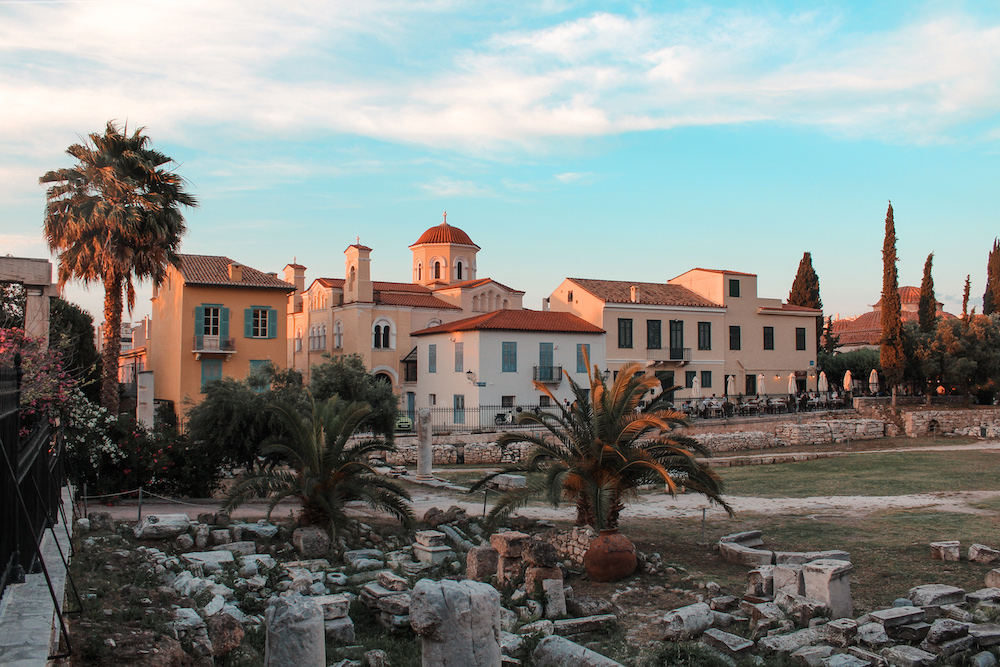
6. Overpacking
Another mistake that many travelers make in Greece is overpacking. This is a mistake that you can make while traveling anywhere, yes, but it’s especially inconvenient when you do it in Greece.
Why? If you plan to visit multiple destinations in Greece, including Greek islands, you’ll likely be taking various forms of transportation like ferries or short domestic flights between islands. The last thing you’ll want to deal with on travel days is schlepping around a heavy suitcase or paying extra to check it.
I definitely recommend packing for your trip in a compact carry-on suitcase. Keep in mind that depending where you stay, you might also have to walk up steps or hilly, uneven streets with your luggage!
7. Not renting a car
There are many destinations in Europe where you don’t need to rent a car, but (most of) Greece is not one of them. You don’t need a car in Athens, because it’s walkable and there’s good public transit.
However, on most of the Greek islands or in the northern part of the country, renting a car is very helpful! Public transportation is often limited or nonexistent, and taxis are pricey and hard to come by. Having a rental car will give you more flexibility to explore on your own, and most hotels offer free parking.
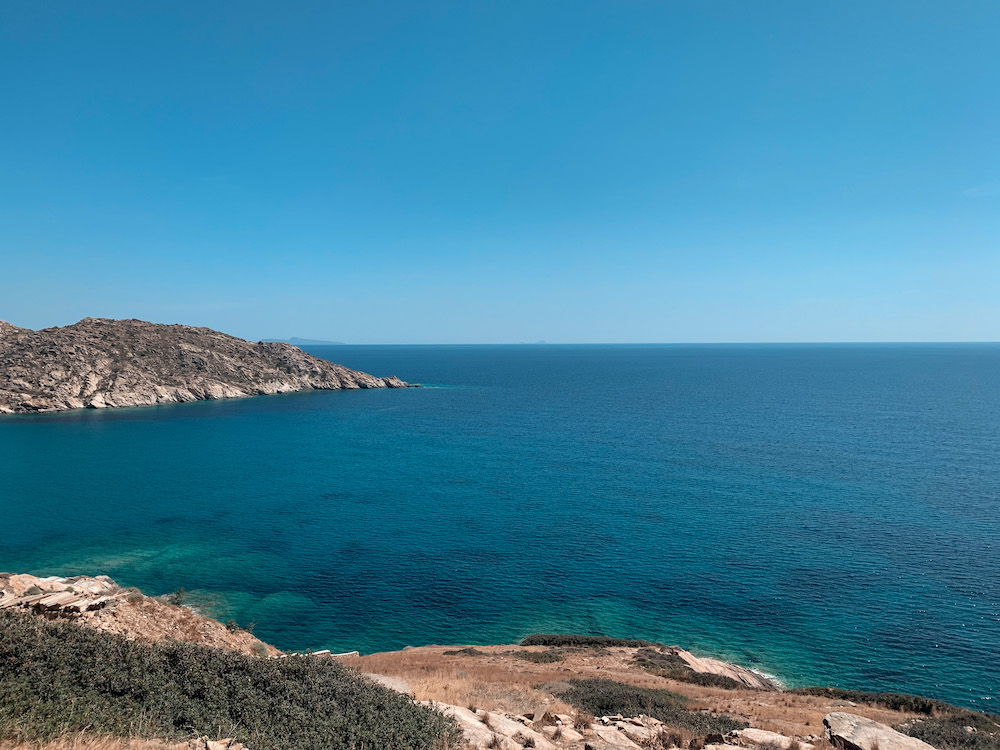
On some of the Greek islands, renting ATVs is also a popular alternative. I did this for several days when I stayed in Ios, and it was such a fun way to explore the island. I was there during shoulder season (late May), so the roads were never busy, and I enjoyed the freedom of getting around the island by ATV.
Whatever you choose, having your own set of wheels is a great way to make the most of your time in Greece. To find the best deals on rental cars in Greece, I recommend using DiscoverCars.
8. Waiting too long to book flights and ferries
There are a finite number of spaces available on flights and ferries to and within the Greek islands, and it’s not uncommon for them to completely sell out, especially in the peak summer months.
It’s a good idea to book flights and ferries as soon as possible, especially for more popular islands. Booking early also ensures that you can lock in the best price, because last-minute tickets are expensive.
9. Visiting islands in the off season
Greece in the off season can definitely be a cool experience. Bustling cities like Athens are more laidback in the winter, and you can explore the sights without having to deal with the heat or the crowds.
However, it’s a mistake to think you can visit the Greek islands during the off season. Most of them completely shut down during the winter months. Even in the ultra-popular Santorini and Mykonos, you’ll find that the majority of hotels, restaurants, and shops close during the off season.
On smaller islands, there might only be a single grocery store open and that’s it. In general, the off season for tourism in the Greek islands lasts from late October until late March. If you visit during this time, be prepared for a very quiet experience. You’re also likely to encounter cool, rainy weather.
If you’re just looking for fewer crowds, the shoulder season of late April through late May and late September through mid-October is when I’d recommend visiting the Greek islands instead.
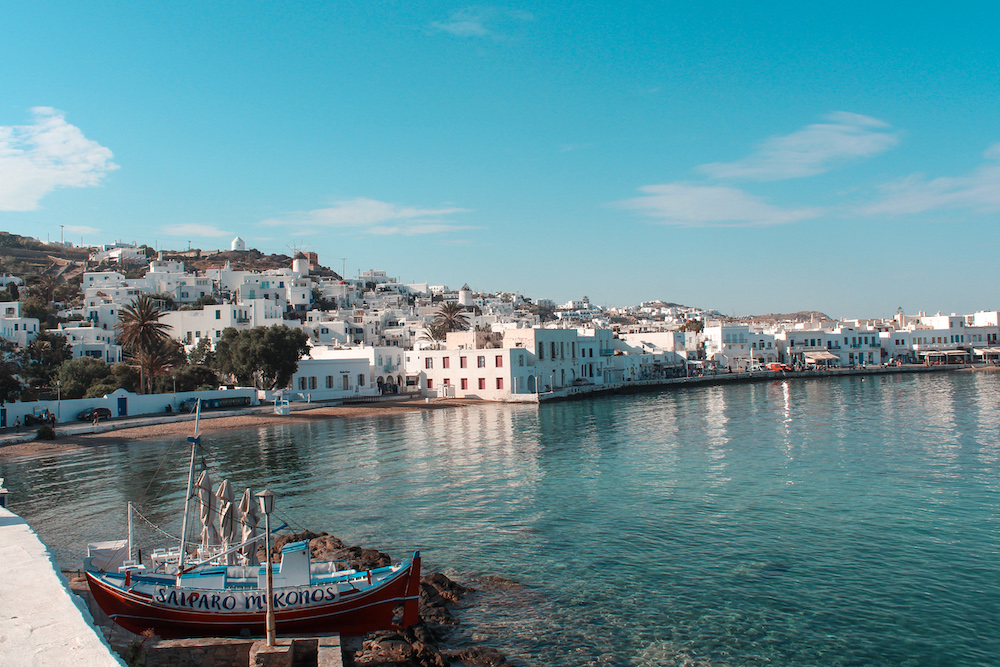
10. Moving too quickly
There’s a temptation to try to cram as much as you possibly can into your Greek vacation, and I get it. You might only have one or two weeks, and you want to make the most of your limited time.
However, I’d caution you against moving too quickly or packing too much in. If you only have one week, don’t try to visit three different destinations, for example. It’s better to visit fewer destinations and actually enjoy yourself rather than spending half your time in transit from one destination to the next.
11. Not carrying cash
You can pay with card in many places in Greece, but there are definitely lots of situations you’ll come across where you can only use cash, like paying in small local shops or buying from street vendors.
It’s a good idea to always have some cash in Euros on hand, preferably small bills and coins. This is especially important when traveling in more rural areas or on smaller, less touristy islands.
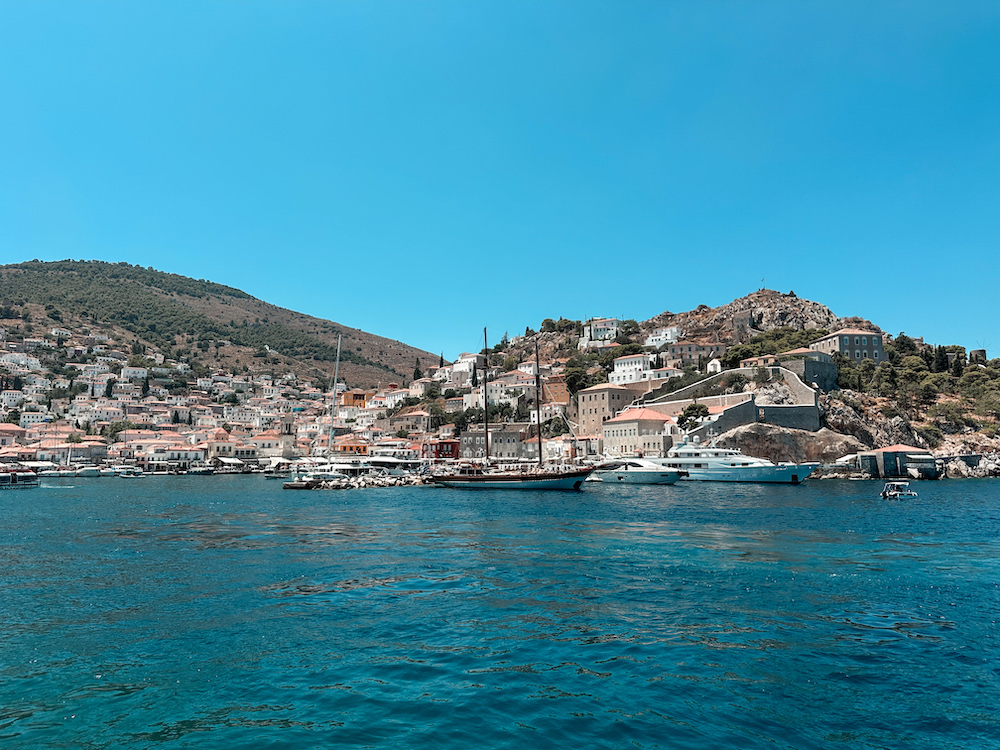
12. Overpaying for souvenirs
A lot of places in Greece sell the same exact souvenirs, ranging from t-shirts to tote bags to keychains to bracelets to magnets and more. These are the types of mass-produced souvenirs that are probably made in China anyway, but hey, who doesn’t want a cute evil eye bracelet to commemorate your time in Greece?
If these are the kinds of souvenirs you’re looking for (and no judgement here), then I highly recommend buying them in Athens, where you can often find items for just €1 or €2. The same souvenirs are sold for a huge markup in tourist shops on the more popular islands like Santorini and Mykonos.
You can also find a lot of unique handmade souvenirs in Greece. Wherever you are, whether in Athens or on one of the islands, I recommend looking slightly off the main tourist trail and dipping into side streets to browse around. You can often find better deals when you get away from the overpriced tourist traps.
13. Haggling for prices
On the subject of shopping, it’s important to note that haggling is not a thing in Greece. If you’ve been to a country like Turkey or Egypt, you might be accustomed to haggling in markets and shops.
However, this is a big faux pas in Greece and it’s not part of the culture, despite the relative proximity of Greece to these other countries on the Mediterranean Sea. So just know that when you’re shopping in Greece, the price that you see is the price that you’re expected to pay (much like in the rest of Europe.)
14. Not learning any Greek
Finally, a big mistake that many tourists make in Greece is not learning any Greek. Now, I understand that Greek isn’t exactly an easy language to learn (there’s a reason for the saying “it’s all Greek to me.”) And most Greeks you encounter in a tourism or hospitality setting will speak at least some English.
But learning a few words of the local language goes a long way, and Greek people really appreciate it if you just learn the basics: “kalimera” (good morning), “kalispera” (good evening), “parakalo” (please), “efharisto” (thank you), “andio” (goodbye) are just a handful of polite words that are nice to know.
Mistakes to Avoid in Greece
These are the biggest mistakes that travelers make in Greece.
Greece is an incredible destination, and you don’t want to jeopardize your special trip by making one of these common errors. Knowing what to avoid will help you plan the perfect vacation instead.
Enjoy your trip to Greece!
Related Guides:
- How to Visit Greek Islands on a Budget
- 10 Best Things to Do in Athens, Greece
- 14 Best Luxury Hotels in Athens, Greece
- 7 Best Day Trips from Athens, Greece
- Mykonos vs. Santorini: Which Greek Island Is Better?
- 10 Best Luxury Hotels in Mykonos, Greece
- 11 Best Luxury Hotels in Oia, Santorini
- Where to Stay in Chania, Crete: Top 9 Hotels
- 10 Best Hotels in Ios, Greece
- 9 Best Hotels in Hydra, Greece