Visiting Iceland in Winter: 10 Things You Should Know
Are you thinking of visiting Iceland in winter?
These are some of the most important things to know before you go! I first visited Iceland during winter, spending a week in the country from late February to early March. And I absolutely loved it!
That being said, a winter trip might not be for everyone. I also want to return to Iceland soon to see it during summer, because I’m sure the contrasts will be unbelievable. If you’re thinking of going in winter, though, I can highly recommend it. There are just some important things you should know first.
You’ll definitely want to be prepared if you’re taking a winter trip to Iceland.
This is a unique country that does require some advance planning, especially if you’re going during winter. Here are the most important things you should know about visiting Iceland in winter:
1. Prepare for the weather.
Winter really puts the “ice” in Iceland. As you can probably imagine, winter weather in Iceland is no joke! Winter basically lasts from October through April, with May and September still quite cold, and June through August being the “warmest” months (if you can call it that since temperatures are around 55° F.)
Temperatures don’t drop as low as you might expect, with the average lows in winter rarely falling below 25° F and the average highs hovering around 35° F or slightly higher. However, it feels exceptionally cold due to the frequent overcast skies, short daylight hours, high winds, and extreme weather patterns.
Since most of Iceland’s main attractions are in nature and require spending a lot of time outdoors, a winter trip might not be the best choice for you if you really dislike cold weather. But if you don’t mind the cold and come prepared, visiting Iceland in winter can be a very fun and rewarding experience.
2. Driving will be a challenge.
Renting a car and driving Iceland’s famous Ring Road is a popular way to see the country — probably the most popular way to see the country. But if you visit in winter, that will be a BIG challenge.
In fact, I would honestly caution against visiting in winter if you plan to self-drive. I visited Iceland on a group trip and we had an Icelandic driver who safely transported us around the country in a big van. He had spent all his life driving in these conditions, but they were truly unlike anything I’d ever seen!
The visibility was often down to almost nothing due to snow and sleet, and the roads were frequently icy. Many of the country’s roads (especially F-roads, which are more remote) are completely closed in winter, and even segments of the Ring Road can close if the weather turns especially bad.
I’d like to self-drive the next time I visit Iceland during summer, but after what I experienced on my winter trip, I truly would not recommend coming here in winter if you plan on renting a car.
3. Pack serious winter gear.
If you’re visiting Iceland in winter, you definitely want to come prepared with the right gear. I was actually a little underprepared on my trip, but luckily I was able to borrow things from other girls on my trip.
Some of the winter essentials you’ll want to pack for Iceland include:
- Warm thermal base layers (long-sleeved tops and leggings)
- Heavy sweaters
- Light fleece jacket
- Heavy down parka (knee-length or longer)
- Snow pants to wear over your base layer
- Water-resistant winter boots
- Thick wool socks
- Gloves, scarf, and hat
Seriously, don’t skip out on any of these items, because you will need them all!
Also, when it rains/sleets/hails in Iceland, it’s often so windy that an umbrella is useless. So it’s also a good idea to make sure that you heaviest outerwear is water-resistant to protect you from the moisture.
4. The days are short.
Being located so far north, Iceland experiences very short days in winter. If you’re visiting around the winter solstice (December 21), then you can expect to have just four daylight hours!
When I was in Iceland in late February and early March, the days had started getting longer (around ten hours of daylight) so this wasn’t as big of a deal. But if you go in the dead of winter, it might be.
The inverse of this is true in summer, when daylight can stretch over twenty hours around the summer solstice in Iceland (June 21.) This is definitely one of the perks of visiting Iceland in summer.
5. There are fewer crowds.
One of the benefits of taking a winter trip to Iceland is fewer crowds. Iceland is a fairly popular tourist destination, receiving over 2.2 million visitors annually (compared to a population of just 400,000!)
However, the bulk of those visitors come during the summer, especially June through August. May and September are considered to be the shoulder season and still see a good number of tourists.
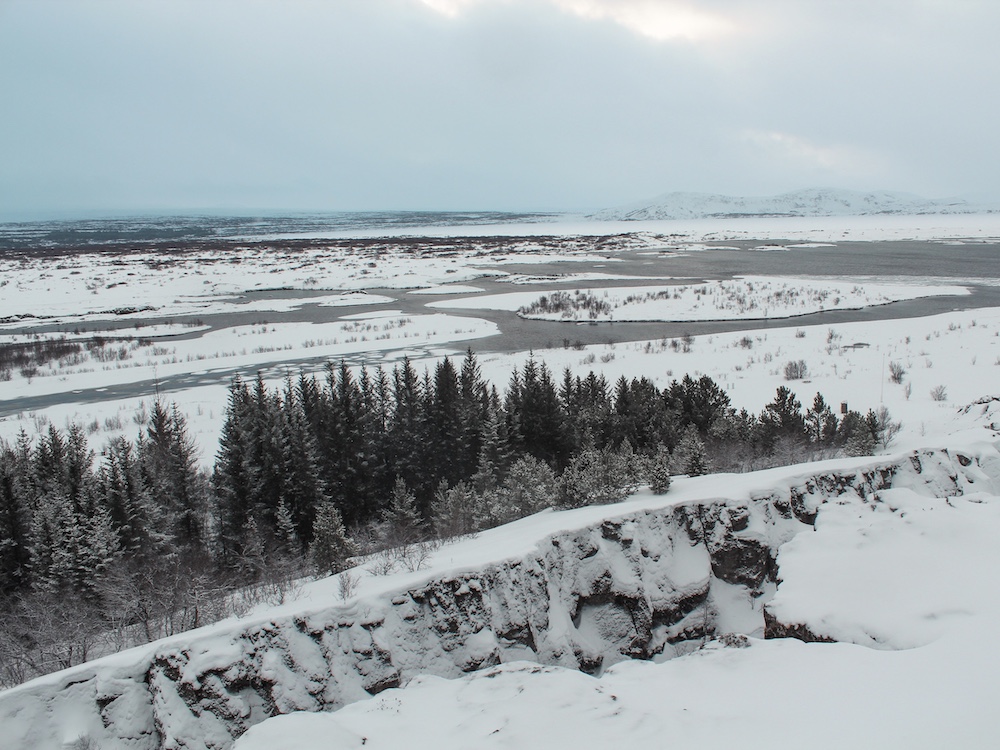
But if you visit from October through April, you’ll get to experience the sights with fewer crowds. This is especially evident on popular tourist routes like the Golden Circle. On my winter trip to Iceland, our small group often had entire areas to ourselves, whether that was a famous waterfall or a hot spring.
6. Prices can be cheaper.
Another perk of visiting Iceland in winter? You can save some money! Because summer is peak season, everything tends to be more expensive, including hotels, rental cars, tours, and other activities.
However, all of these things can be significantly less in the winter months. Iceland is still a super expensive destination, don’t get me wrong (ranking second in Europe after Switzerland), but you can save some money and have a slightly more budget-friendly trip if you decide to visit during winter.
7. You might see the Northern Lights.
Did you know winter is the best time to see the Northern Lights in Iceland? This makes sense when you consider what I said earlier about how winter has fewer daylight hours and lots of darkness!
The best time to see the Northern Lights is from October through April. They only appear when the sky is clear and the weather is dry, which meant I didn’t have the best conditions on my snowy, rainy trip. Although I didn’t get to see the Northern Lights on my visit, winter is still the best time for spotting them!
(And did you know that if you book a Northern Lights spotting tour in Iceland, most of them will offer a second free tour if you don’t end up seeing them the first time you go? So you get two chances!)
8. Crampons are a must-have.
I mentioned winter gear earlier, but one thing that really surprised me in Iceland was the need for crampons. Crampons are a traction device you put around your boots to help you walk in snow and ice.
The little spikes on the bottom make it much easier to walk without slipping and sliding all over the place. As I mentioned before, I was on a group trip, and our local guide had crampons for all of us. And let me tell you, they were 100% necessary for visiting many of the popular tourist sites in winter.
For example, many famous waterfalls in Iceland are located just a short walk away from the road and parking area. However, with how icy it was, it would have been impossible to get there without crampons! Even the sidewalks on street in Reykjavik were hard to walk on with how slippery and icy they were.

9. It’s a true winter wonderland.
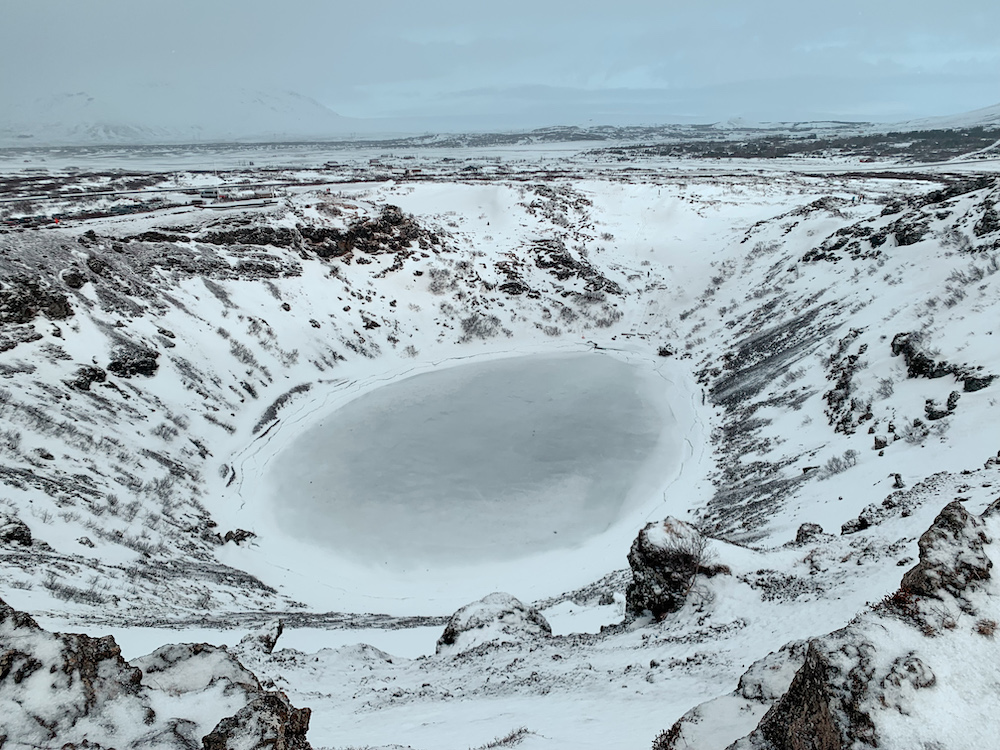
While Iceland looks beautiful in summer when it’s briefly lush and green, it’s equally as beautiful in winter when everything is stark and white. Iceland covered in ice and snow is truly gorgeous.
You’ll get a totally different perspective compared to the summer — you can visit frozen waterfalls, trek through ice caves, see glacial lagoons in all their magnificence, and take in snowy landscapes. I’m really glad I got to see Iceland this way, and it gave me a huge appreciation for this country’s natural beauty.
10. There are many ways to stay warm.
Because Iceland is so cold for most of the year, there are luckily plenty of ways to stay warm while you’re here during winter! Like the rest of the Nordic countries, coziness is a big deal in winter. There’s nothing better than warming up in a cozy restaurant or bar at the end of a cold day spent outdoors.
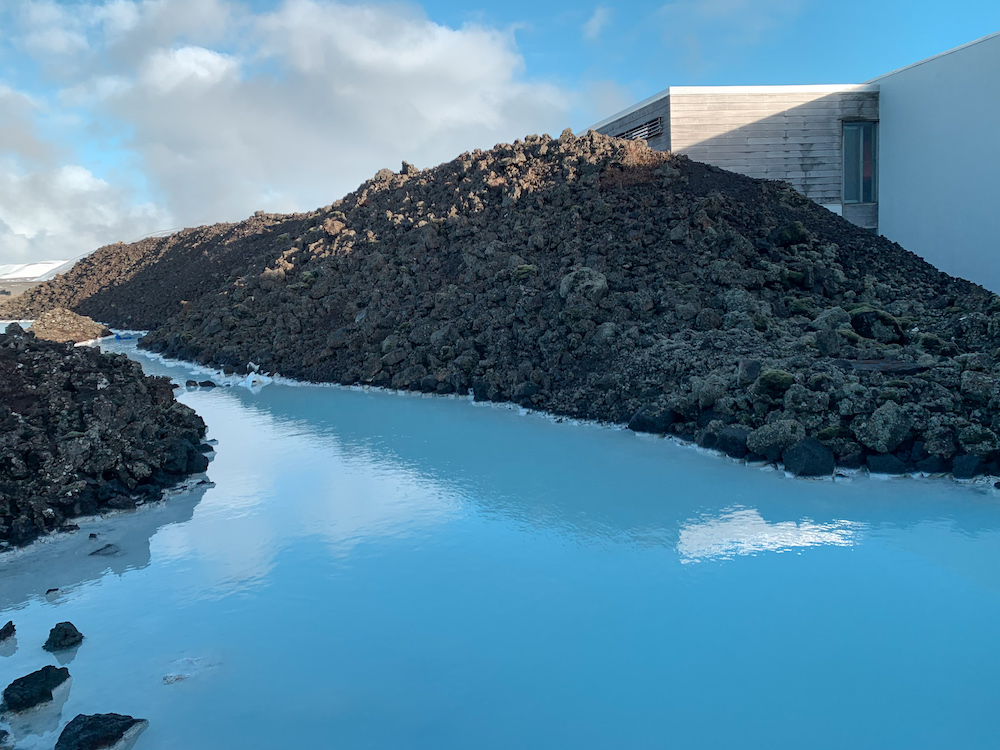
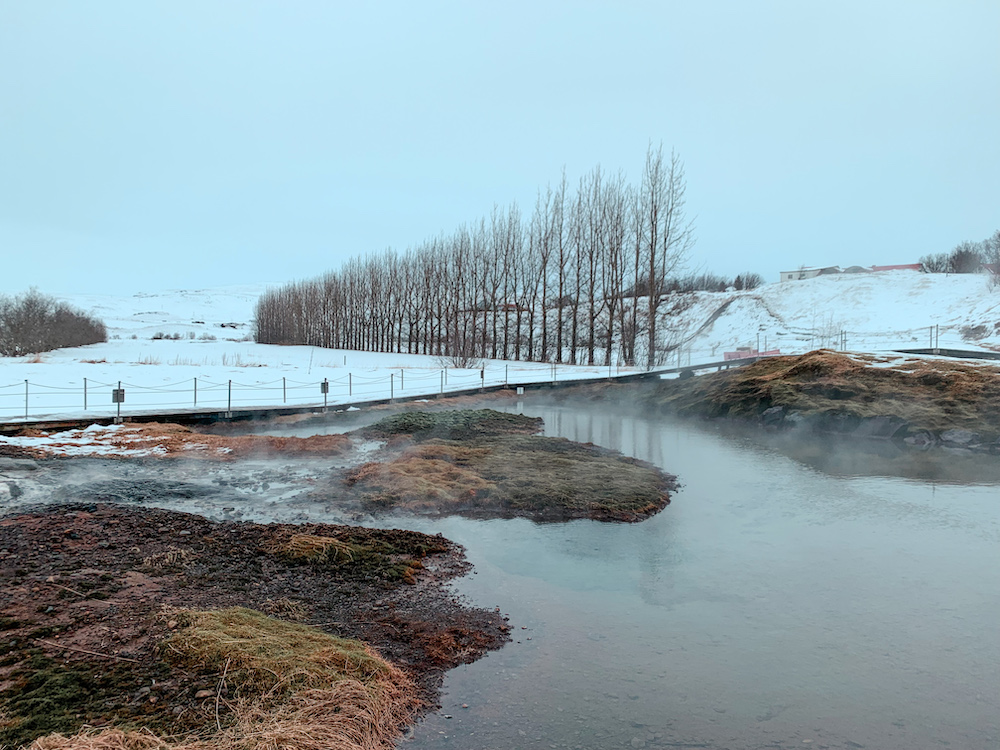
Iceland is also famous for its many geothermal hot springs — there are dozens across the country! Some of them are manmade and popular tourist attractions like the Blue Lagoon, while others are naturally occurring and more of a hidden gem. There’s nothing like a hot spring on a snowy winter day!
Many hotels and guesthouses in Iceland also offer hot tubs, which is another great way to relax at the end of a busy day. So don’t forget to pack your swimsuit for Iceland, even if you’re visiting in winter!
Visiting Iceland in Winter: Is It Worth It?
So is visiting Iceland in winter worth it? My answer is definitely yes, as you’ve probably guessed. Winter is a unique and beautiful time to visit Iceland, with many surprising benefits and perks.
However, there are also some drawbacks to visiting Iceland in winter, and I wanted to make sure you knew about those too so you can make the right decision about when to visit for yourself. But as long as you come prepared and know what to expect, I’m sure you’ll have a great time visiting Iceland in winter.
I hope this guide was helpful, and have a great trip to Iceland!
Related Guides: