Best Time to Visit Venice, Italy
When is the best time to visit Venice, Italy?
This guide will offer a season-by-season breakdown of the pros and cons of visiting Venice at different times of the year, along with my thoughts on when the best time is to visit this magical city.
Venice is one of my favorite destinations in Europe, and I’ve now been there on four different occasions — and during all four seasons! I’ve spent longer than the average tourist does on each of my visits to Venice, meaning I’ve racked up some serious time in this city. And it’s one I never get tired of!
Venice is a controversial destination. Some people complain it feels like a crowded tourist trap, a Disneyland-like destination void of any authenticity. Other people (myself included) think that this city of bridges, canals, and gondolas is full of charm, with something amazing to discover around every corner.
I honestly think that when you choose to visit Venice can have an impact on your feelings towards this city. Because in my opinion, there are definitely better and worse times to visit this city!
So let’s get into it, and answer the question of when is the best time to visit Venice.

When Should You Visit Venice?
Below you’ll find a season-by-season guide to visiting Venice. I’ll share the pros and cons of visiting at each time of year, as someone who has traveled to Venice in all four seasons. Different times of year may work better for different people, depending on your interests and what kind of traveler you are.
Each season in Venice has something to offer to travelers, including unique holidays, events, and festivals.
I also want to quickly note how much time you should spend in Venice, regardless of what time of year you’re traveling. I’m of the belief that you need to spend at least three full days in Venice.
One or two days simply won’t cut it, and you won’t be able to get a feel for the different neighborhoods of the city, or venture to other islands in the Venetian Lagoon. I think you could easily spend four or five days in Venice without running out of things to do — but three days is the minimum I’d recommend.
Now, the following guide will help you decide when the right time is for you to visit Venice.
Visiting Venice in the Spring
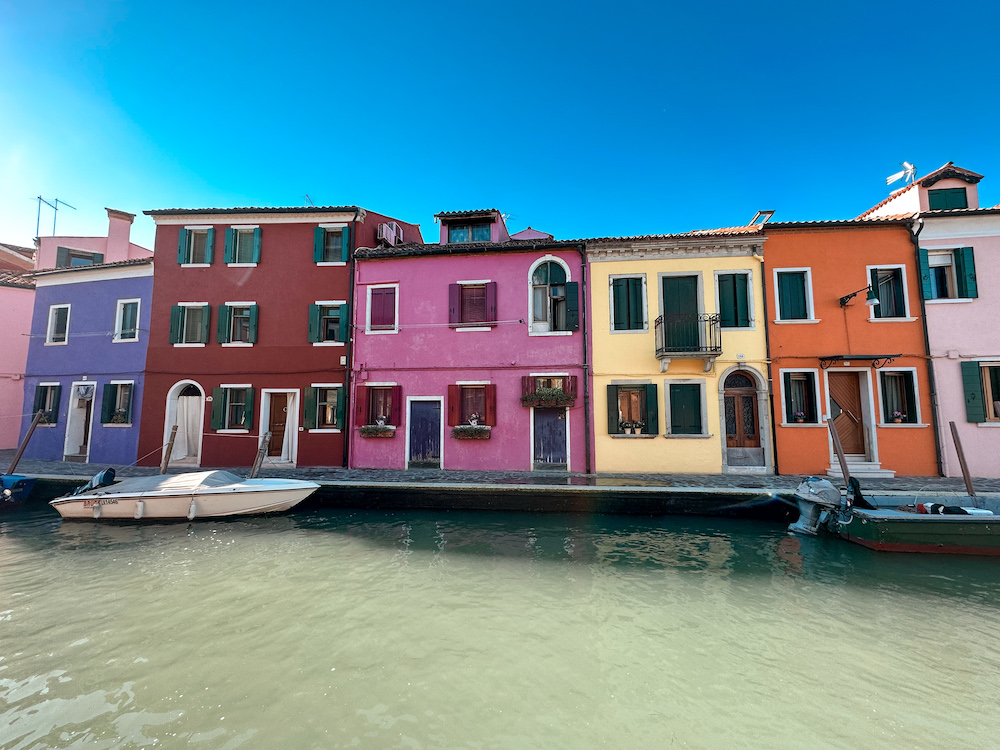
Let’s start off with spring. Spring is an excellent time of year to visit Venice! It’s still the off-season, so you won’t encounter as many tourist crowds in Venice as you will in the summer. However, occasionally the Carnival celebration falls in March, in which case the city will be bustling with all the festivities.
In the years when Carnival falls in February, then March will be a very quiet month to visit Venice. April and May start to see more visitors, but you can also enjoy warmer, spring-like weather.
It can still be quite chilly in the spring in Venice, especially in March. However, as long as you dress accordingly, the cooler weather shouldn’t be a problem as you explore Venice! Things start warming up more by May, so if you’re looking for warmer weather, a late-spring visit will be ideal for you.
Spring is a good time to visit if you’re looking for lower prices, as well. Things really skyrocket when the peak summer tourist season begins, but during the spring, you can still find good deals on hotels.
Visiting Venice in the Summer
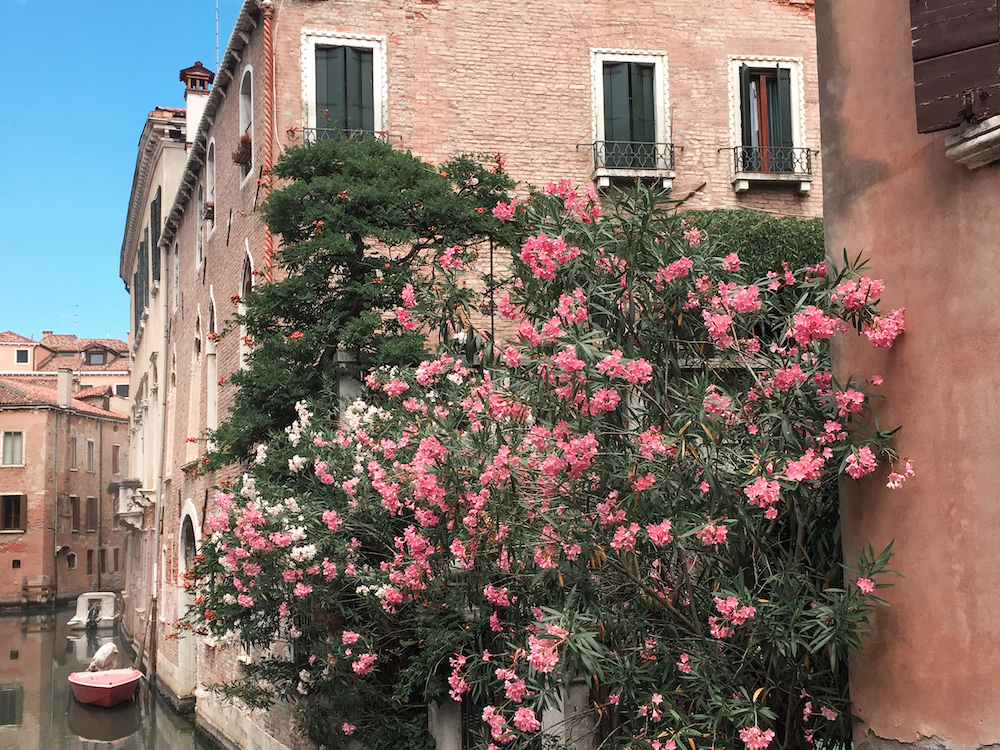
I’ll be brutally honest here — I think summer is the worst time you can visit Venice. Most people who complain about Venice and have a bad impression of the city probably visited during the summer.
My second visit to Venice was during the summer, and it was a totally different vibe than my first trip two years earlier, when I visited in the early spring. Why is summer such a bad time to visit Venice?
First of all, it’s the peak tourist season, which means the city gets incredibly crowded. July and August are the busiest months, although June and September see very high numbers of tourists too.
Summer is also when prices are the most expensive for hotels in Venice, since demand is so high. You might end up paying more than double for a hotel in the summer compared to the off-season.
Venice is also hot in the summer. In fact, it even starts to feel downright swampy. All of these factors combined together can make summer a pretty unpleasant time of year to visit Venice. When you hear about the strains that overtourism is causing in Venice, you’ll see it at its worst in the summer months.
If summer is the only time you can visit Venice, don’t despair! It’s still possible to have a good time, especially if you get off the beaten path and stray from the most crowded, touristy areas of the city.
I’d recommend early June and late September, too, if you’re looking for better weather and lower prices.

Visiting Venice in the Fall
Fall is a good time to visit Venice, but it comes with some caveats. First of all, the off-season in Venice (and many other European destinations) is not what it used to be. The months of September and October are still very popular times to visit, with October in particular seeing a sharp uptick in visitor numbers.
So if you visit Venice during the fall, don’t expect it to be empty! However, it’s a lot less crowded than the summer months. The weather is nice, too. It’s still usually warm and summery (but not sweltering hot) in September, while it typically cools down and starts to feel like it’s officially fall in October.
November is an interesting time to visit Venice for several reasons. First of all, this is when it starts to get really cold in Venice. Tourist numbers also plummet sharply in November. But the locals come out in full force for the Feast of Madonna della Salute, a unique celebration held every year on November 21.
This is also the time of year that the “acqua alta” phenomenon can occur. Basically, whole sections of the city end up flooding, necessitating temporary elevated walkways and knee-high rain boots.
If you know what to expect going into a fall visit to Venice, I think it’s a great option. Early fall in Venice has the best weather, but late fall will be best in terms of lower crowds and lower prices.

Visiting Venice in the Winter
Finally, there’s winter in Venice. Winter is the time of year with the fewest visitors (with one major exception, which I’ll discuss below), and I think it’s an underrated season to visit Venice. Since it’s the off-season, you can experience the fewest crowds and the lowest prices in Venice during the winter months.
However, the tradeoff is that it’s cold. Although it rarely ever snows in Venice, it’s still bitingly cold and windy in the winter. It also rains a lot, and the “acqua alta” flooding can sometimes occur.
December is a fun time to visit Venice, though, with twinkling Christmas lights and decorations adding a festive note to the city’s moody atmosphere. And January is really good if you’re looking for few crowds.
The exception I mentioned above is Carnival, which typically occurs in mid- to late February (although it occasionally extends into the first week of March.) This two-week festival leading up to the Lenten period before Easter is celebrated in Venice with elaborate costumes and Venetian masks.
It’s an incredible time of year to visit Venice (in fact, experiencing Carnival here is high on my bucket list!), but it’s also very crowded. You’ll also see a big spike in hotel prices during Carnival.
If you’re planning a visit in February, you’ll definitely want to check the dates for Carnival. This is something you’ll need to factor into your planning, whether you want to see it or skip it.

Best Time to Visit Venice, Italy
This guide showed you the best time to visit Venice, Italy with a season-by-season guide.
To recap, the time I think is the worst to visit Venice is summer. Spring and late fall are good times of year to visit if you’re looking for mild weather and reasonable crowd levels, while winter (aside from Carnival) is great if you don’t mind the cold and want to experience the lowest crowds and the lowest prices.
Enjoy your trip to Venice!
Related Guides: