A Guide to Visiting the San Antonio Missions National Historical Park
San Antonio Missions National Historical Park is a must-visit when in San Antonio, Texas.
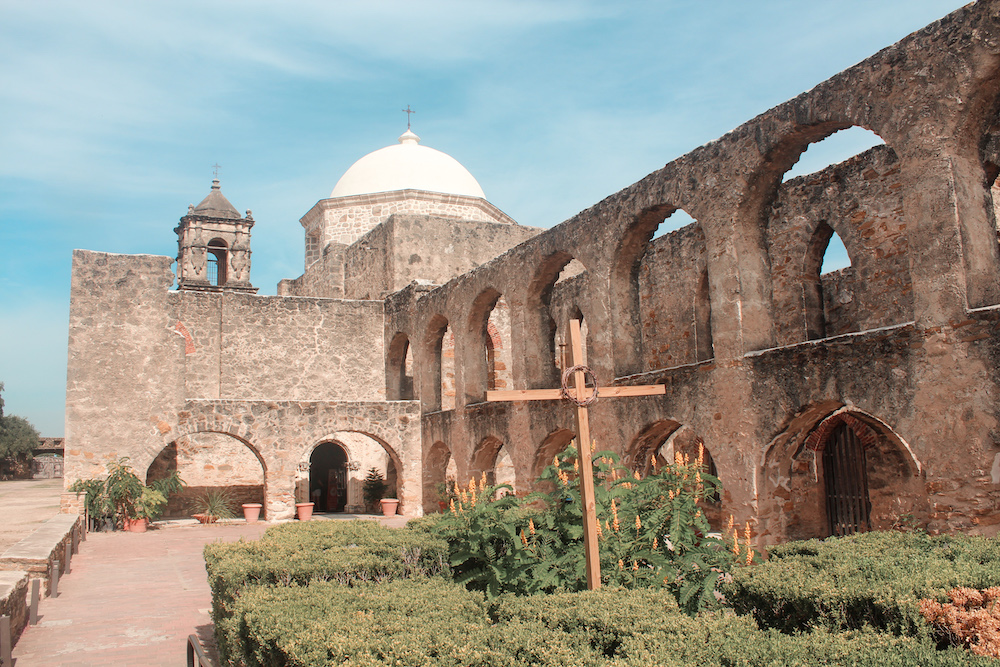
Consisting of four Spanish colonial missions, the San Antonio Missions National Historical Park is a US National Park Site and a UNESCO World Heritage Site. If you’re interested in history, you need to visit!
The history of the missions is fascinating, and the sites themselves are very beautiful. The missions are located south of Downtown San Antonio, on a stretch of about 6.5 miles near the San Antonio River.
These are the four missions that make up the San Antonio Missions National Historical Park:
- Mission Concepción
- Mission San José
- Mission San Juan
- Mission Espada
You can easily visit all four missions in half a day, making this a great excursion from Downtown San Antonio. I’ll talk more about how to get to the missions and how much time you need later on.

History of the Missions
How did the San Antonio missions come to be? These missions were established in the colonial era by the Spanish, in order to convert the indigenous people of Texas into Catholics and to turn them into tax-paying citizens of the Spanish crown. The missions were founded by Franciscan friars from Spain.
The indigenous people who entered the missions around San Antonio typically came from small, independent bands who couldn’t compete with larger tribes like the Apaches or the Comanches. The missions offered a place of respite where they could get access to consistent meals and protection.
They were educated in Spanish and Latin, and learned new skills and trades. However, they had their own identities and culture stripped away, and were forced to adopt the Spanish religion and way of life.
Life inside the missions could be harsh. But many indigenous people stayed because their prospects outside the relative safety of the mission weren’t ideal either. The missions consisted of a church at the center, but they were larger compounds with living quarters, agricultural areas, and defensive walls.
The first missions in San Antonio were founded in the late 17th century and early 18th century, and they ceased functioning by the early 19th century when Mexico gained independence from Spain.
What About the Alamo?
There were actually five Spanish missions in San Antonio, but only four are part of the San Antonio Missions National Historical Park, which is operated by the US National Park Service.
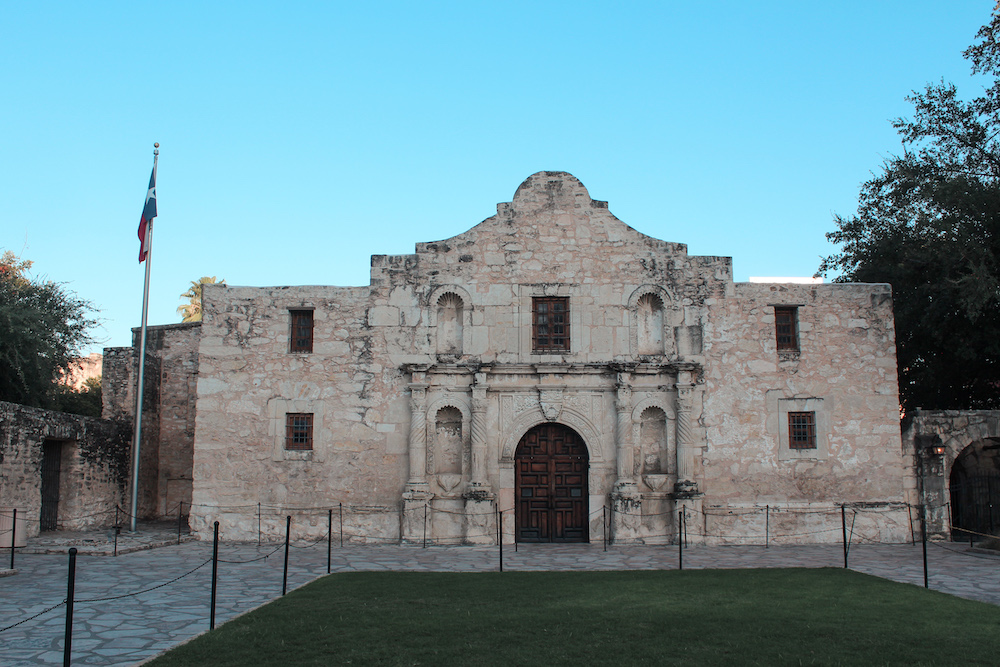
The fifth mission, Mission Valero, is actually the most famous one of all — it’s better known as the Alamo. This mission was the first one to be established in San Antonio back in 1718. More than a century later, in 1836, it was the site of the Battle of the Alamo, a pivotal moment during the Texas Revolution.
The Alamo is owned by the State of Texas, so it is not part of the National Historical Park, which is operated by the federal government. It’s also the only one of the five missions that no longer has an active church.
Like the San Antonio Missions National Historical Park, you can visit the Alamo for free. You will just need a reserve a free ticket online, or pick one up from the Visitor Center in order to enter the church. There are also audio guides, access to the Alamo exhibition hall, and guided tours available for an additional fee.
How to Visit the Missions
Now let’s talk about how to visit the San Antonio Missions National Historical Park.
Like I mentioned, the four missions are located within 6.5 miles of each other from north to south. If you include the Alamo as the fifth mission, it’s a total distance of 8.5 miles. If you’re staying in Downtown San Antonio, only the Alamo is nearby and easily accessible, and the other missions are further south.
Many people will drive to visit the four missions that make up the San Antonio Missions National Historical Park. This is what I did, and it was very easy. Parking at the missions is free and plentiful.
Driving is the quickest way to visit all four missions, as the furthest one is just 15 minutes from Downtown San Antonio, and all the missions are just a few minutes apart from each other by car.
Another option is the Hike and Bike Trail. This path connects all four missions, and much of it runs along the San Antonio River. Although this option sounded appealing to me, it was over ninety degrees when I visited San Antonio, and much of the trail is not in the shade. This is also more time-consuming.
If you’re visiting in the winter when it’s cooler (late November through late February), this could be a good option, but given the extreme heat of San Antonio for much of the year, it’s not practical.
Public transportation on the city’s VIA buses is only available for the two northernmost missions, which means it’s not a very practical option either. For this reason, I highly recommend just driving.
Tour to the San Antonio Missions
If you don’t want to drive yourself or use the Hike and Bike Trail, a guided tour is also an option.
This 3.5-hour guided tour is a great way to visit all four missions. It includes pickup and drop-off from your hotel in Downtown San Antonio and transportation to the missions in an air-conditioned van.
You’ll have a knowledgeable local guide who will take you to each of the four missions, and share the history of these UNESCO World Heritage Sites while answering any questions you may have.

Important Info
The San Antonio Missions National Historical Park is open every day from 9 AM until 5 PM, with the exception of Thanksgiving, Christmas Day, and New Year’s Day, when the sites are closed.
Visiting the missions is completely free, and free National Park Ranger-led tours are also available at the Visitor Center at the largest mission, Mission San José, at 10 AM and 11 AM each day.
Each of the missions has free public restrooms and a Visitor Center.
It’s important to note that all four missions still have active churches. The historic churches are owned and maintained by the parish, while the National Park Service owns and maintains the grounds.
This means that sometimes the churches themselves will have services going on when you visit. You can still enter the church, but remember to be quiet and respectful. If there is a private event taking place at the church (like a wedding or a funeral), then you may not be able to enter the church at that time.
You can find more info on the official website.
Tips for Visiting the Missions
I recommend setting aside a minimum of three hours for visiting the four missions of the San Antonio Missions National Historical Park. You could easily spend even more time exploring them all, though.
If you’re driving, it’s just a few minutes between each mission. If you’re using the Hike and Bike Trail, you’ll want to allow more time, as each mission is approximately 1.5 miles from the next one.
It gets very hot in San Antonio, and there isn’t a lot of shade at the mission sites, but the Visitor Centers are air-conditioned. You’ll also find water bottle refill stations around the park, so stay hydrated!
When I visited, it was a Monday morning in late September, and there were very few other visitors at any of the missions. However, it might be more crowded on weekends (but never as busy as the Alamo!)
Mission Concepción
The first mission as you head south from Downtown San Antonio is Mission Concepción. This mission was established in its current location in 1731. It features a beautifully restored church, which, like all mission churches, is still active. There are also many remnants from the original mission compound.
At Mission Concepción, you can also visit the Padre Margil Pilgrimage Center. This center is the starting point for the pilgrimage route along the four missions, and also features exhibits and a cafe.


Mission San José
Next up is Mission San José. Known as the “Queen of the Missions”, this is the largest of the four missions. It’s also where you’ll find the largest Visitor Center. You can take a free NPS Ranger-led tour at 10 AM and 11 AM each day. There’s also a 25-minute movie that shows every hour, and a museum and gift shop.
This mission was established in 1720 and features another large and beautiful church. All of the walls around this mission compound are still intact, including the small single-room quarters where the indigenous people living at the mission were housed. There’s also a gristmill from the 18th century.


Mission San Juan
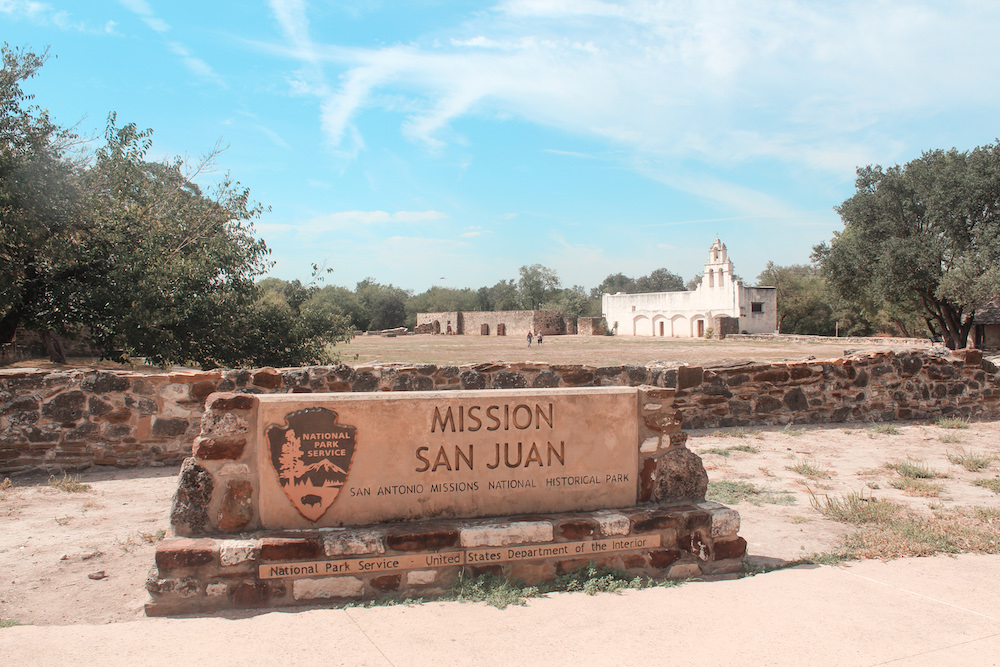
The third mission, as you continue heading south, is Mission San Juan. This mission was established in its current location in 1731. It has a small, lovely church and many remnants of other original buildings.
A highlight at this mission is the Yanaguana Trail. It’s an accessible hiking trail that takes you on a loop by the San Antonio River. Be sure you don’t miss taking this short hike through nature at this mission.

Mission Espada
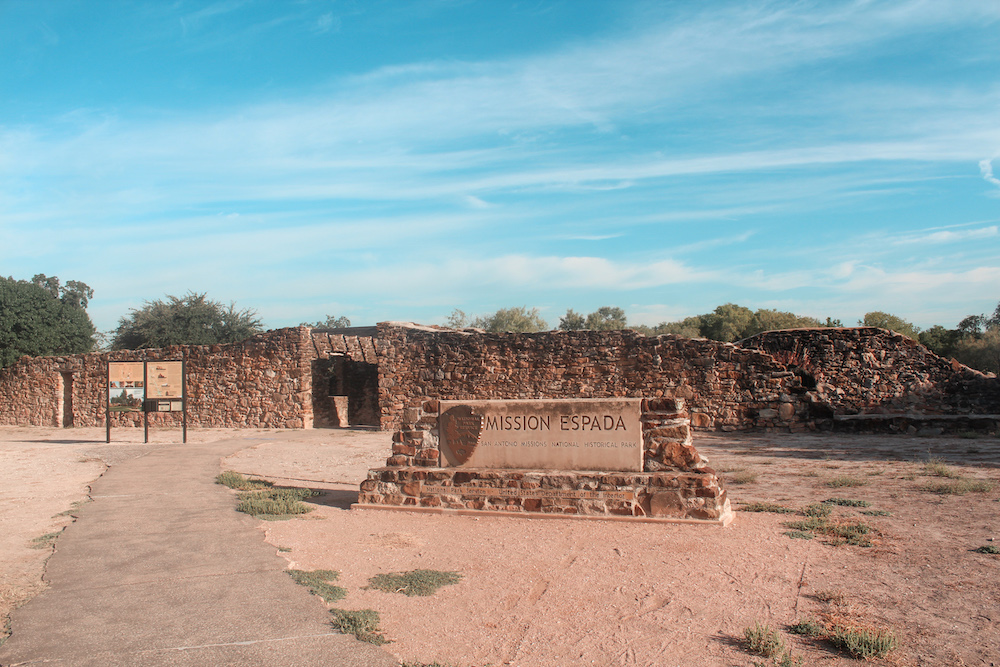
The final, southernmost mission is Mission Espada. It was established in its current location in 1731, although the mission was originally established in a different location back in 1690. Mission Espada is perhaps the prettiest mission, because there are many lush plants and flowers planted on the grounds.
It has the smallest church, and like all the other missions, it’s an active church. Services are held in both Spanish and English. You can also visit the nearby Espada Aqueduct from here, which dates to 1745.

Visiting the San Antonio Missions National Historical Park
This guide showed you how to visit the San Antonio Missions National Historical Park.
Visiting the missions was a highlight of my trip to San Antonio. The Alamo might be the most visited historical site in San Antonio, but you shouldn’t skip the missions! Although they are a little further out of the way, they’re all worth a visit. I felt transported to another era visiting these Spanish colonial missions.
If you’re interested in history, the missions are a must-visit. You can easily spend anywhere from a few hours to half a day seeing all four sites. Each mission is unique, with a fascinating history.
Enjoy your visit to San Antonio and the missions!
Related Guides: