Is Montenegro Worth Visiting?
Is Montenegro worth visiting? This small, lesser-known Balkan country is one that stays under the radar for the most part, frequently overlooked by many travelers for Croatia or Greece instead.
I’ve been to Montenegro three times now, and I’m here to tell you that yes, this hidden gem is worth visiting! If you’re looking for an underrated European destination that combines gorgeous natural scenery, picturesque beaches, charming historic towns, and affordable prices, you can’t skip Montenegro.
Many people don’t know much about Montenegro, if they’ve heard of it at all, only associating it with the former Yugoslavia. But there’s so much more to the country than that! Montenegro has definitely been growing in popularity, but I’m still surprised by how undiscovered it remains by most travelers.
Here’s everything you need to know about visiting Montenegro, and why it’s worth it:
Where Is Montenegro?
Montenegro is located in the Balkan region of southeastern Europe, and it shares a border with a number of other Balkan countries: Croatia, Bosnia & Herzegovina, Serbia, Kosovo, and Albania.
This small country has a coastline along the Adriatic Sea spanning just over 182 miles. It’s also known for other bodies of water like the stunning Bay of Kotor and Shkodra Lake (shared with Albania.)
The country is largely mountainous, making for dramatic scenery both along the coast and in the northern part of Montenegro, where you can find the picture-perfect Durmitor National Park.
What Is Montenegro Known for?
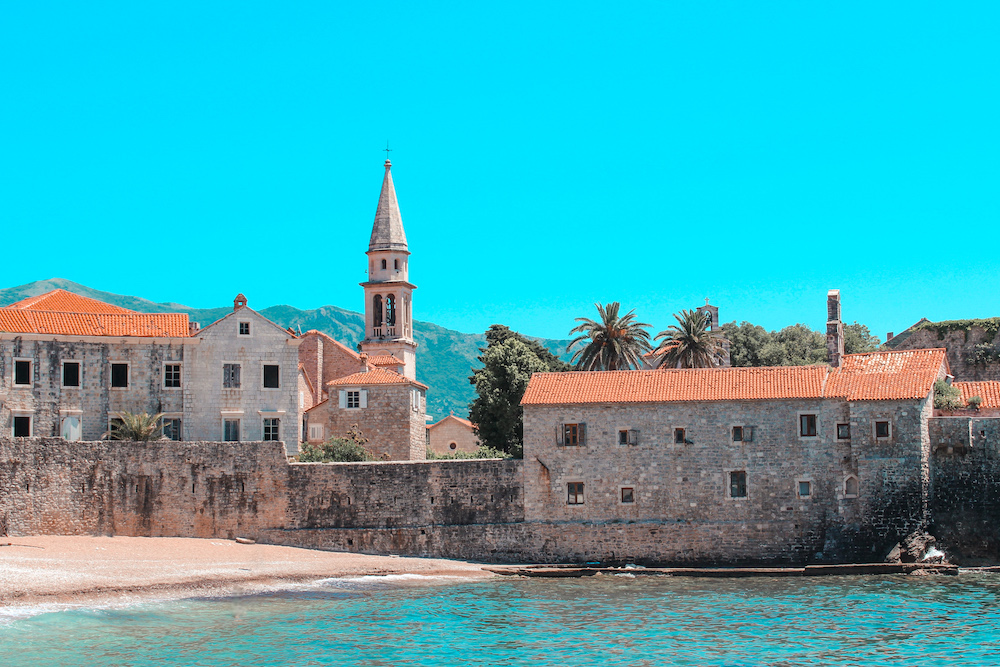
Montenegro is known for its great beaches, particularly along a stretch called the Budva Riviera. The city of Budva is known for its nightlife, as well as its beautiful historic walled Old Town.
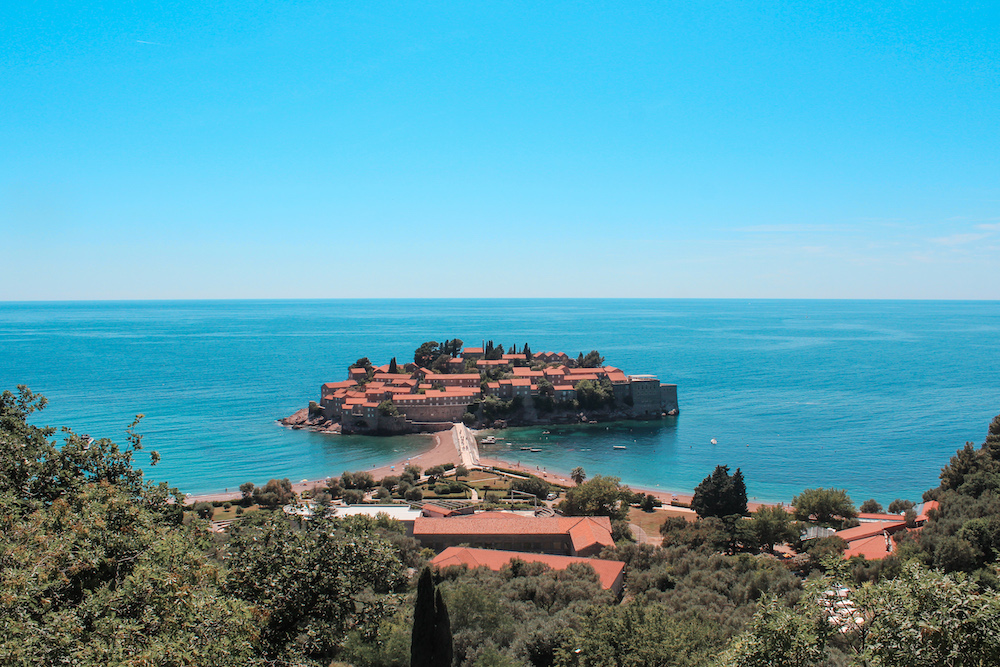
While in Budva, you can take a boat tour to the islands, beaches, and caves around the city, or visit the nearby Sveti Stefan, a charming small town with a beautiful little island right off the coast.
Kotor is another popular destination in Montenegro with a walled Old Town dating back to medieval times. In fact, Kotor has even been named a UNESCO World Heritage Site due to its historic significance. This town is located on the Bay of Kotor, which is known for its dramatic and mountainous scenery.
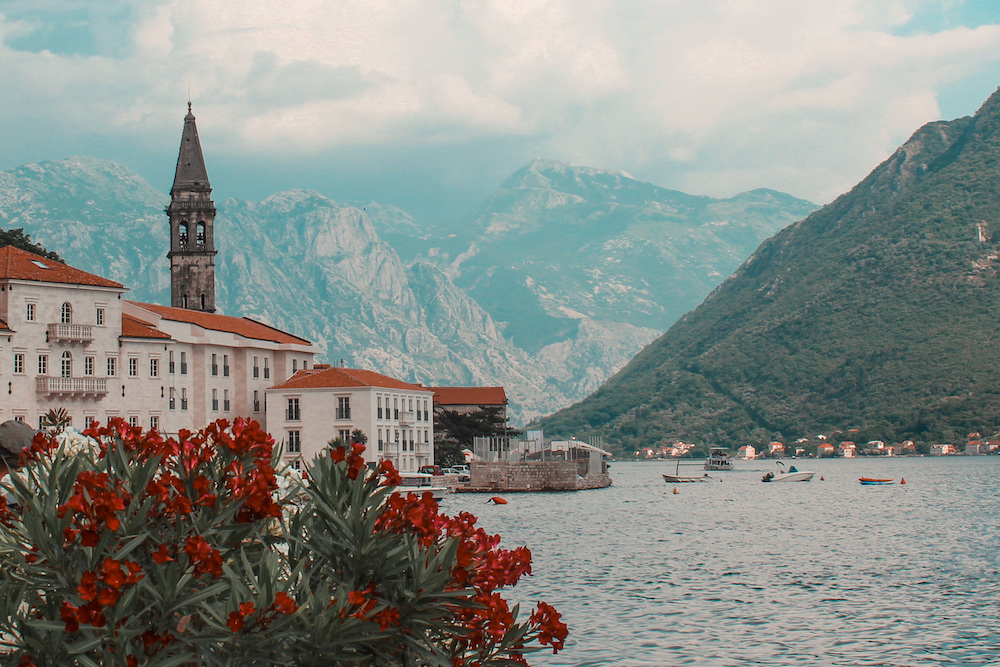
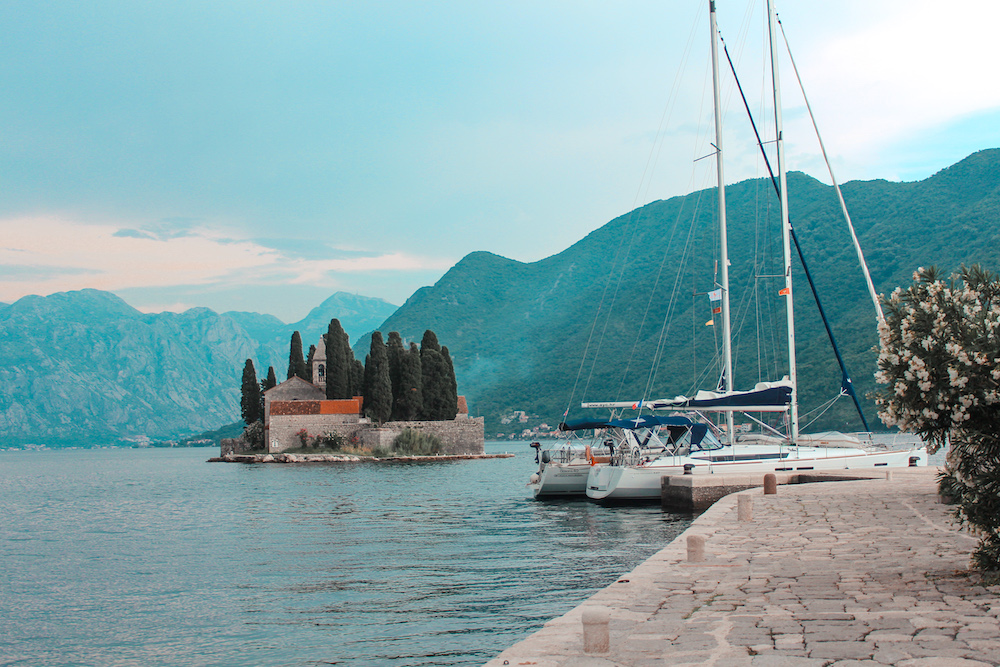
While in Kotor, you should also visit nearby Perast, a small town where you can take a boat tour out to a scenic little island in the Bay of Kotor with a blue-domed church called Our Lady of the Rocks.
Montenegro is also known for Durmitor National Park, where you can hike and go river rafting.
Other destinations worth visiting include Stari Bar, the ruins of a medieval hilltop town, Ulcinj, a gorgeous beach town, and Tivat, a flashy town along the Bay of Kotor that reminds me of Monaco.

Practical Info for Visiting Montenegro
The official language in Montenegro is Montenegrin, but many people also speak some English. You’ll notice there’s a lot of overlap with Montenegrin, Croatian, Serbian, and Bosnian if you also travel to those countries. I recommend learning basic greetings and words of politeness if you plan to travel here!
The official currency of Montenegro is the Euro, although Montenegro is not part of the EU (for now.)
Montenegro is one of the six countries that make up the former Yugoslavia, along with Croatia, Slovenia, Serbia, Bosnia & Herzegovina, and North Macedonia. It became fully independent in 2006.
This makes Montenegro one of the youngest countries in Europe. However, the country’s ancient history dates back to the 6th century when the ancient Illyrian kingdom thrived here. Montenegro later fell under the rule of the Venetian Republic, the Ottoman Republic, and finally Yugoslavia.

How Long to Spend in Montenegro
How long should you spend in Montenegro? Many people visit the country for just one day, either on a day trip from nearby Dubrovnik, Croatia or as a port of call on a Mediterranean cruise.
If you only have one day to spend in Montenegro, it’s a great way to get an introduction to the country (in fact, my first visit to Montenegro was for only one day!) However, if you have more time to spare, I highly recommend spending at least three full days in Montenegro, if not even longer than that.
This small country packs a large punch, and you could easily fill a whole week of activities.
With three full days, you can at least hit the highlights, including one day in Kotor (and nearby Perast), one day in Budva (and nearby Sveti Stefan), and one day in Durmitor National Park.
When to Visit Montenegro
You can visit Montenegro at any time of year, but my top recommendations would be May or September. These are the “shoulder season” months before and after the busy summer season where you can enjoy nice weather and a lively atmosphere, but fewer crowds and lower prices than during the summer.
If you plan to spend a lot of time at the beach, September would be the better month since the Adriatic Sea will be warmer towards the end of summer rather than right at the beginning of summer.
June is also a good summer month to visit, especially the first half of the month while things are still not quite as crowded. July and August are peak season, and by far the busiest and most expensive months.
If you want to experience Montenegro with even fewer crowds and don’t mind slightly cooler weather, April and October are also good months to visit. November through March are the off-season in Montenegro, and many places along the coast will be very quiet (or even closed.) It can also get quite cold in the winter.
Getting to Montenegro
Montenegro has two international airports, Tivat and Podgorica. Tivat is the most convenient airport to fly into if you’re visiting the coast. There are nonstop flights to both airports from around Europe.
It’s also possible to fly into nearby Dubrovnik, Croatia, which has a larger international airport (that even receives direct flights from the United States during the summer months.) From Dubrovnik, it’s just a 45-minute drive to the border crossing with Montenegro, and roughly a two-hour drive to Kotor.
Croatia and Montenegro combine well into a trip if you have a longer amount of time to travel, and you could then continue on to Albania, which is reachable by bus or driving from Montenegro.

Getting Around Montenegro
Montenegro is a destination where renting a car is definitely your best option. There is a public transportation system in Montenegro, but it’s not the best and buses run pretty infrequently.
You’ll have a much easier time exploring the country with your own set of wheels, especially given how compact it is. Renting a car is Montenegro is affordable (and usually a pretty casual process) and I didn’t find it to be a stressful place to drive at all (AKA no speed demons like you might find in Italy.)
When it comes to parking, many hotels in Montenegro offer free private parking and all of the places you’ll visit around the country either have free parking or cheap paid parking by the hour.
Is Montenegro Cheap?
Montenegro is certainly one of the more affordable destinations in Europe, although I wouldn’t go so far as to call it “cheap” anymore. On my most recent visit, I noticed prices had definitely increased.
The country still makes my list of the cheapest countries in Europe, and it’s certainly less expensive than places like Italy, Greece, or Croatia. I’d say it’s “good value” but not necessarily super cheap.
If you avoid going out to eat at touristy restaurants in popular destinations like Kotor, Budva, and Tivat, stay in mid-range hotels, and avoid traveling during the peak summer season, you’ll find it easy to stick to a budget in Montenegro. You can also splurge and have a luxury experience in Montenegro at a much lower price compared to what you spend in other Mediterranean destinations around Europe.

Is Montenegro Worth Visiting?
This guide hopefully answered the question “Is Montenegro worth visiting?” for you.
I definitely think it’s worth visiting this small, underrated Balkan country. I’m sure that one day soon, it will have the same level of popularity as neighboring Croatia, but for now, it remains a hidden gem.
If you choose to visit Montenegro, you won’t be disappointed!
Related Guides: