
What Not to Do in Costa Rica
Are you visiting Costa Rica soon? Here’s what not to do while you’re there!
I’ve spent many months traveling all over Central America, including Costa Rica. I made plenty of mistakes on my first trip, so I want to save you the trouble and show you what mistakes to avoid.
Costa Rica is an incredible destination. This Central American country is known for its amazing wildlife and biodiversity, and its stunning natural beauty. You’ll find varied landscapes in Costa Rica, including beaches on the Pacific and Caribbean coasts, gorgeous national parks, jungles, volcanoes, waterfalls, and more.
For active, adventurous travelers, there is no shortage of exciting things to do in Costa Rica, from surfing to hiking to ziplining to whitewater rafting to waterfall rappelling and so much more. If you’re looking for a more relaxed trip, you can also simply enjoy the beach, do yoga, or soak in a natural hot spring.
Costa Rica is the perfect place for a vacation, but there are many mistakes that first-time visitors make. As someone who has traveled extensively through all of Central America, including Costa Rica, I’ve put together this list of common mistakes so you know what not to do in Costa Rica…
1. Assuming it’s cheap
The biggest mistake that many travelers make is assuming Costa Rica is cheap. This is not the case! Although other countries in Central America can be quite affordable, many costs in Costa Rica are on par with those in the US or Canada. It ranks last on my list of the cheapest countries in Central America.
Nice hotels, tours and activities, rental cars, private tourist transportation, and meals at touristy restaurants are quite expensive in Costa Rica. It’s definitely possible to save money while traveling in Costa Rica (staying at more basic hotels, using public transportation whenever possible, and eating at non-touristy restaurants), but it’s never going to be as affordable as, say, neighboring Nicaragua.
Of course, Costa Rica does offer a high level of safety (it’s a very peaceful country) and has a well-developed tourism infrastructure, especially in comparison to the rest of Central America. But just keep in mind that prices might be a lot higher than you expect, and it’s not a budget-friendly destination.
2. Waiting to book things at the last minute
Another big mistake that first-time visitors make in Costa Rica is waiting to book things at the last minute. This is especially important if you’re visiting from December to April, which is peak tourist season.
The prices for hotels, tours, rental cars, and more can all go up at this time. They can also fully sell out if you wait too long to book things. If you’re traveling during the peak season, I recommend planning and booking as much of your trip as possible at least three months in advance to get better deals.
When it comes to Costa Rica planning, the earlier you do it, the better. This isn’t like other Central American destinations, where you can easily just wing it. Even if you aren’t visiting Costa Rica during the peak season, you should still try to book things as early as you can to lock in the lowest prices.
Wondering where to stay in Costa Rica? Check out my Costa Rica hotel guides!
- 8 Best Hotels in Monteverde, Costa Rica
- Where to Stay in La Fortuna, Costa Rica
- 7 Best Hotels in Manuel Antonio, Costa Rica
- Where to Stay in Puerto Viejo, Costa Rica

3. Not doing your research on rental cars
Renting a car is one of the best ways to get around Costa Rica. Public transportation exists, but it doesn’t go everywhere, and you’ll have way less flexibility. Private transportation (hiring a driver) is extremely expensive, and shared tourist shuttles are more affordable, but they can still be quite pricey.
If you rent a car, you will have a lot more flexibility and control over where you go and when, and it can end up saving you money, especially if you’re sharing the costs between multiple people.
However, it’s important to do your research before renting a car in Costa Rica. You might see crazy good deals online for rental cars for as little as $5 to $10 a day. But these prices never tell the full story, and taxes and fees often aren’t included in the quote you see online. Neither is rental car insurance.
Rental car insurance is mandatory in Costa Rica, and you can’t opt out of getting it through your rental car company. So you should really expect to pay $50 to $75 a day for a rental car in Costa Rica. I recommend using DiscoverCars for finding and booking a rental car in Costa Rica at the best price.
4. Skipping the sodas
One of the best ways to save money on food in Costa Rica is by eating at sodas! These are small restaurants that are sort of like diners, and it’s where locals frequently eat, especially for lunch. Most sodas are very casual and may have a pretty limited menu. And they’re much more affordable than touristy restaurants.
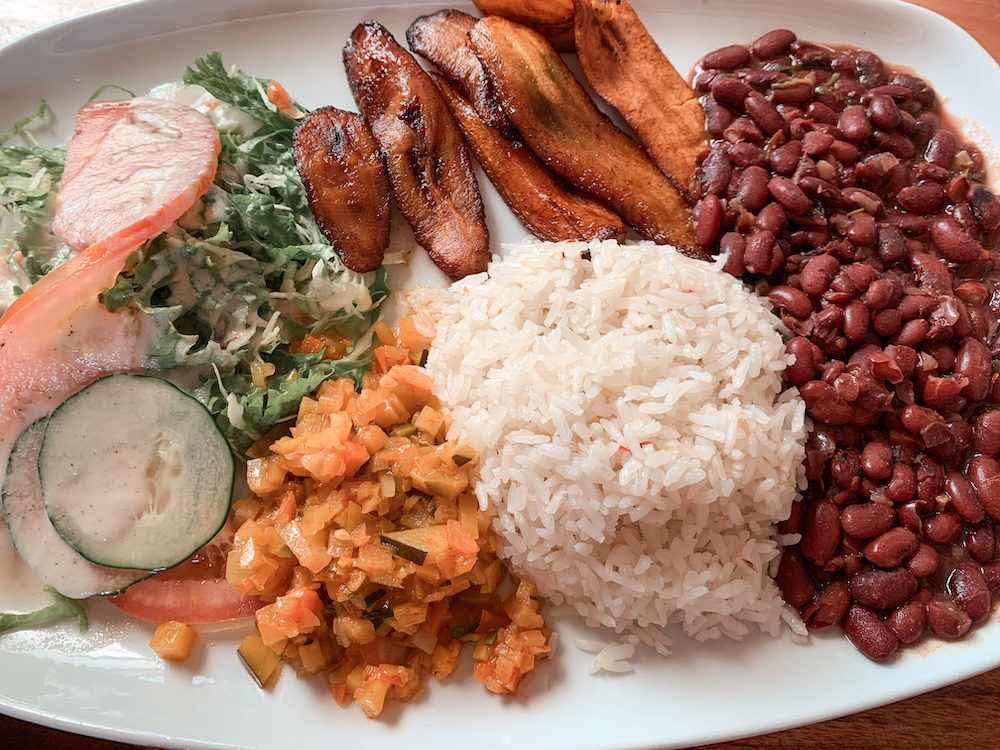
My favorite thing to eat in Costa Rica was a casado, which is a big plate that includes rice, beans, fried plantains, salad, and an optional protein source. These are very common at sodas, and super delicious and cheap. If you want to save money on food, having lunch at a soda every day is the way to go.
5. Trying to fit too much in
Trying to cram too much into your Costa Rica itinerary is a recipe for disaster. If you only have one week in Costa Rica, you won’t be able to see the whole country — it’s best to focus on just a couple of destinations. If you have two weeks in Costa Rica, you can do maybe four or five different destinations.
But getting from place to place can take longer than you might expect, and you don’t want to spend your limited time stuck in transit or rushing around trying to fit everything into a short amount of time. Instead, embrace the “pura vida” motto of Costa Rica (meaning “pure life” or “simple life”) and take it easy.
6. Getting sunburned
This one might seem obvious, but it’s so important I wanted to include it anyway. The sun can be very strong in Costa Rica, even on cloudy days, so you should be diligent about applying sunscreen.
There is nothing that will ruin your trip faster than having painful red burns on your skin (trust me, I’ve been there — multiple times.) So make sure to pack plenty of sunscreen for your trip, and use it!

7. Buying bottled water
Costa Rica is one of the only places in Central America where you can actually drink the tap water. In more remote areas, you might not be able to and should stick to filtered water, but in most of the larger cities and towns and popular tourist destinations, you’ll have no issue drinking the tap water.
Because of this, there’s no need to waste money on buying bottled water, not to mention the waste of plastic! Costa Rica is a pretty eco-friendly country as it is, but you should also help to preserve its amazing biodiversity and ecosystems by reducing single-use plastic waste as much as you can.
If you’re nervous about drinking the tap water, you can get a refillable LifeStraw water bottle, which automatically filters tap water for you. I have traveled all around the world with this, and I love it!
8. Forgetting to apply mosquito repellent
Similar to my tip about remembering to apply sunscreen, you also shouldn’t forget to apply mosquito repellent while in Costa Rica. This country is teeming with wildlife, and unfortunately, pesky mosquitoes are part of that. Mosquitoes are present all year long in Costa Rica, mainly near the coast.
They are the worst during the rainy season from May to November, but no matter what time of year you are visiting, you should be sure to pack plenty of mosquito repellent and apply it frequently.
9. Choosing the wrong airport
Costa Rica has two international airports, and depending on where you’re planning to go in the country, choosing one airport over the other can make a big difference when it comes to cost and travel times.
The two airports are in San Jose (SJO), which is Costa Rica’s capital, and Liberia (LIR), which is in the northern part of the country close to the Pacific coast. If you’ll primarily be staying along the Pacific coast, then it makes more sense to fly into Liberia. However, if you’ll be visiting the Caribbean coast or destinations in the interior of the country (like La Fortuna and Monteverde), San Jose is the better choice.
Both airports receive many nonstop flights from North America, while San Jose has a handful of nonstop flights from Europe too. You should always compare flight prices for both airports. Sometimes flying into San Jose can be cheaper, although that’s not always the case — be sure to check and see!
10. Assuming the weather is always the same
Many people think of Costa Rica as having a sunny, tropical climate year-round and all across the country, but that is not the case! The weather actually varies a lot across Costa Rica, and can change rapidly.
One important thing to know is that Costa Rica has two seasons: dry season and rainy season.
As the name suggests, dry season sees very little rainfall and is typically hot and sunny. Dry season coincides with the peak tourist season in Costa Rica, lasting from December through April.
Rainy season is May through November, and frequent rainfall and afternoon thunderstorms are common, although that doesn’t mean the weather is bad all the time. This can actually be a good time to travel to Costa Rica if you’re looking for better deals on hotels and you don’t mind some rainy days.
Also, it’s not hot everywhere in Costa Rica. It can get surprisingly chilly when you’re away from the coast and further inland in the mountains or unique ecosystems like the cloud forests.
11. Not packing the right gear
On a similar note to what I just talked about concerning the weather, another mistake you can make is packing the wrong gear. This is especially important if you’re visiting during rainy season!
For a rainy season trip to Costa Rica, you’ll definitely want to pack an umbrella, a lightweight raincoat or waterproof poncho, and some sturdy, water-resistant shoes (things will get very muddy!)
You’ll also probably want to pack a few warmer clothes, like some pants or leggings, and a couple of sweatshirts or a light jacket. It’s never that cold in Costa Rica, but like I said, you might be surprised by how chilly it can get in some places. If you’re only visiting the beach, you don’t need to worry about this.
A few other Costa Rica essentials you don’t want to forget include a quick-drying travel towel, a waterproof phone case, plus plenty of sunscreen and mosquito repellent, as I mentioned earlier.
12. Underestimating travel times
Two destinations might look close on the map, but travel times can be longer than you’d expect in Costa Rica. Many roads take long, winding routes because they’re going around protected nature areas or landforms like mountains or volcanoes. Off the highways, road conditions can be a bit rough.
If Google Maps is telling you a route will take three hours, for example, you should really plan for 4.5 hours. This is important to keep in mind when planning the logistics of your trip to Costa Rica.
13. Not understanding tipping
The custom of tipping varies by country, so it’s important to know what to expect. In Costa Rica, tips are usually included at restaurants. You’ll see this on your bill as a 10% “servicio” (service charge.)
If the service charge is included, you don’t need to leave an additional tip. If you had great service and want to show your appreciation, you could round up a small amount (like $23.75 to $25.) But this is not expected, and you definitely don’t need to leave an additional 10% since the tip is already included.
Tipping in all other situations is completely optional. You can tip tour guides, private drivers, and so on, but it’s not required. However, an extra $5 to $10 is much appreciated if they did a good job.
14. Expecting to see wildlife everywhere
Costa Rica is famous for its wildlife and biodiversity, and it really is some of the best in the world. You can see monkeys, sloths, coatis, toucans, macaws, frogs, sea turtles, crocodiles, and more.
However, you shouldn’t expect to see wildlife everywhere you go. Even in national parks, it can be hard to spot animals on your own if you’re visiting at the wrong time of day or you don’t know where to look. This is where hiring a professional guide or taking a wildlife-focused tour is really worth it.
Local guides know exactly where wildlife hangs out, and will be able to point out animals that you might have totally overlooked. If spotting wildlife in Costa Rica is important to you, I highly recommend this.

15. Falling victim to petty theft
Costa Rica is a very safe country overall, with one of the lowest crime rates in Latin America. However, that doesn’t mean you should let your guard down. Petty theft and pickpocketing still happen here
You should always keep an eye on your belongings in places like beaches, restaurants, cafes, bars, and on public transportation. If you have a rental car in Costa Rica, be sure to always lock your doors and don’t leave any valuables visible (lock them in the glove box, or better yet, keep them with you.)
16. Not having enough cash
Another mistake that many visitors make in Costa Rica is not having enough cash on hand. You can pay by card in most places around the country, but not everywhere. Places that are cash-only are often found in smaller towns and more remote areas along the Caribbean coast or the Pacific coast.
Some places may also charge an additional fee for paying by card, so you’ll want to have cash for that too.
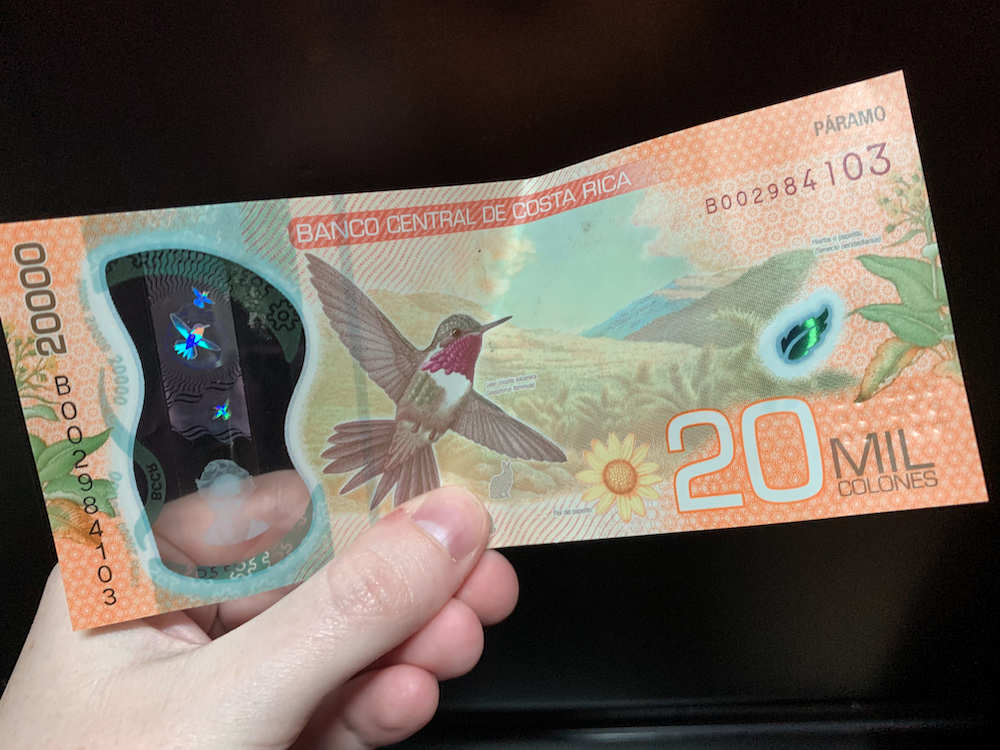
The currency in Costa Rica is called the colon, and the plural is colones. The smallest bills are 1,000 CRC, and while the exchange rate fluctuates a lot, this is usually worth around 2 USD. I recommend having at least $100 in colones on hand at all times, because you might occasionally need it around the country.
At many places in Costa Rica, especially in touristy areas, US dollars are also accepted.
17. Not getting an eSIM
You can use your existing phone plan while in Costa Rica, but you might rack up expensive data roaming charges or pay a high daily rate for it. That’s why I highly recommend getting a local eSIM instead!
I’ve now used Airalo in more than a dozen countries and counting, and I cannot recommend it enough! It saves you so much money by getting you connected with a local eSIM you can use for high-speed data abroad, without impacting your existing phone plan or phone number. And it’s so easy to use.
All you have to do is download the app, select the country you’re traveling to, choose how much data you want (you can choose any amount from 1 GB to unlimited data), and follow the instructions to activate the eSIM. It’s super simple, and you can easily top up your eSIM if you end up needing more data.
It’s also really affordable and makes staying connected while you’re abroad a breeze!
Mistakes to Avoid in Costa Rica
This guide showed you what not to do in Costa Rica, and the biggest mistakes to avoid.
Costa Rica is an amazing destination, offering an unbeatable combination of beaches, jungles, volcanoes, waterfalls, wildlife, and adventure activities. It’s a great place to visit, but you need to come prepared. Hopefully, these tips will help you avoid common mistakes and plan your time in Costa Rica confidently.
Enjoy your trip to Costa Rica!
Related Guides:
- 8 Best Hotels in Monteverde, Costa Rica
- Where to Stay in La Fortuna, Costa Rica
- 7 Best Hotels in Manuel Antonio, Costa Rica
- Where to Stay in Puerto Viejo, Costa Rica
- Nicaragua vs. Costa Rica: Which Should You Visit?
- 12 Things to Know Before Backpacking Central America
- Is Central America Safe for Solo Female Travelers?